

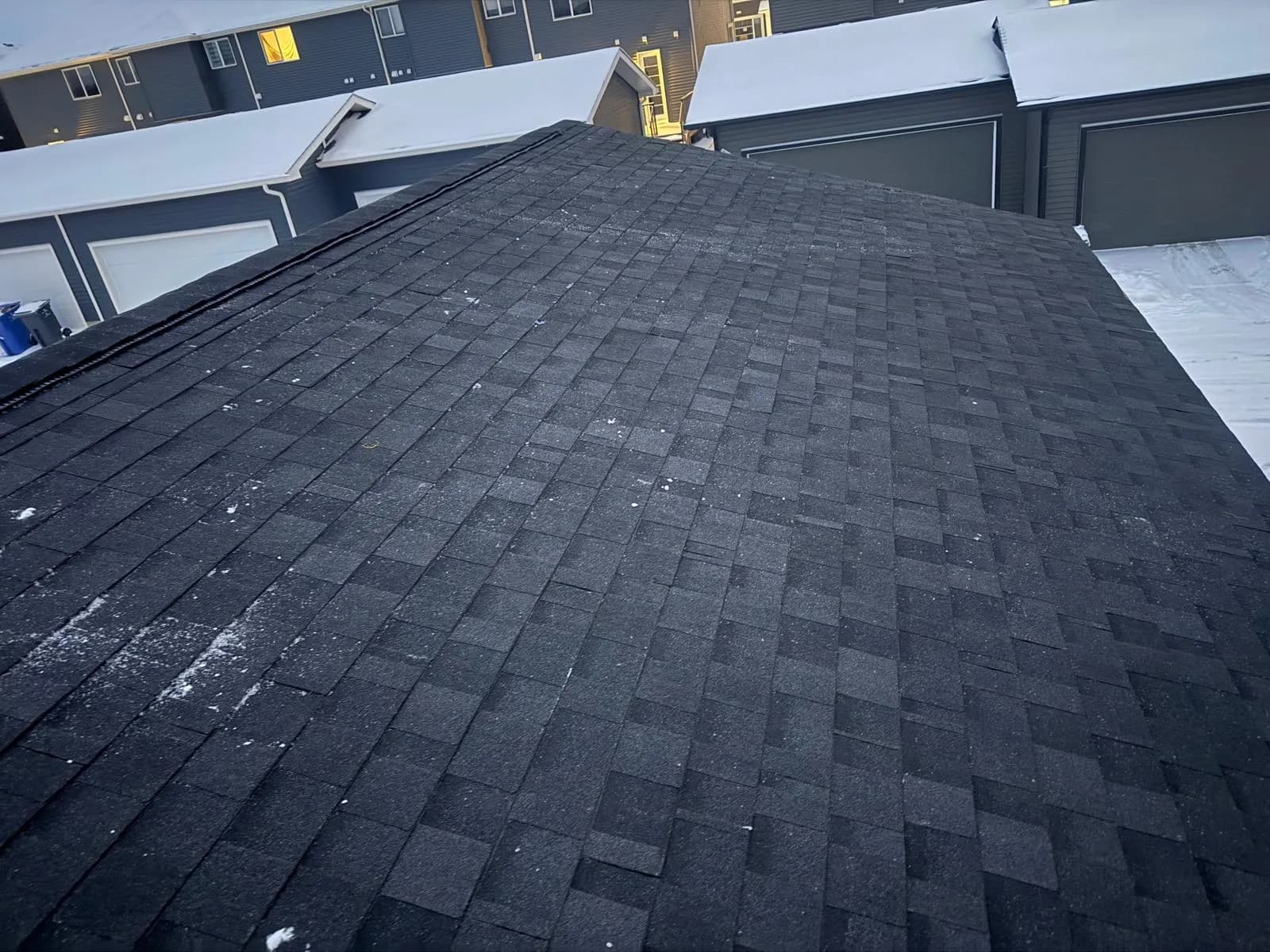
Roofing · Calgary & Area
Storm & Hail Damage Roofing
Hail and storm restoration with the insurance claim handled — documented, scoped, and built back properly
Roofing
Storm & Hail Damage Roofing done right, the first time.
Calgary sits in the most active hail corridor in Canada. When a storm hits, the roof is only part of the problem — the claim is the other part. We inspect and photo-document the damage properly, meet your adjuster on-site, prepare the scope and measurements your insurer needs, and then rebuild the whole envelope: roof, siding, eavestroughs, soffit, fascia and detached garage. On most approved claims, homeowners pay only their deductible.
More about storm & hail
Built for Calgary's weather & homes.
Alberta is the hail capital of Canada, and Calgary is its centre. The June 2020 storm across the city's northeast caused more insured damage than any hailstorm in Canadian history, and roofs bruised in that event were still being discovered on inspection years later. Storms of consequence cross this region most summers, and the corridor running north through Airdrie, Crossfield, Olds and Innisfail to Red Deer takes its share too.
The difficult part of hail damage is that it does not announce itself. A bruised shingle does not leak. The impact fractures the fibreglass mat under the granules; the granules then shed over the following seasons, the exposed asphalt oxidizes under high-altitude UV, and a roof that looked fine in July fails in year three or four — often after the window to claim has closed.
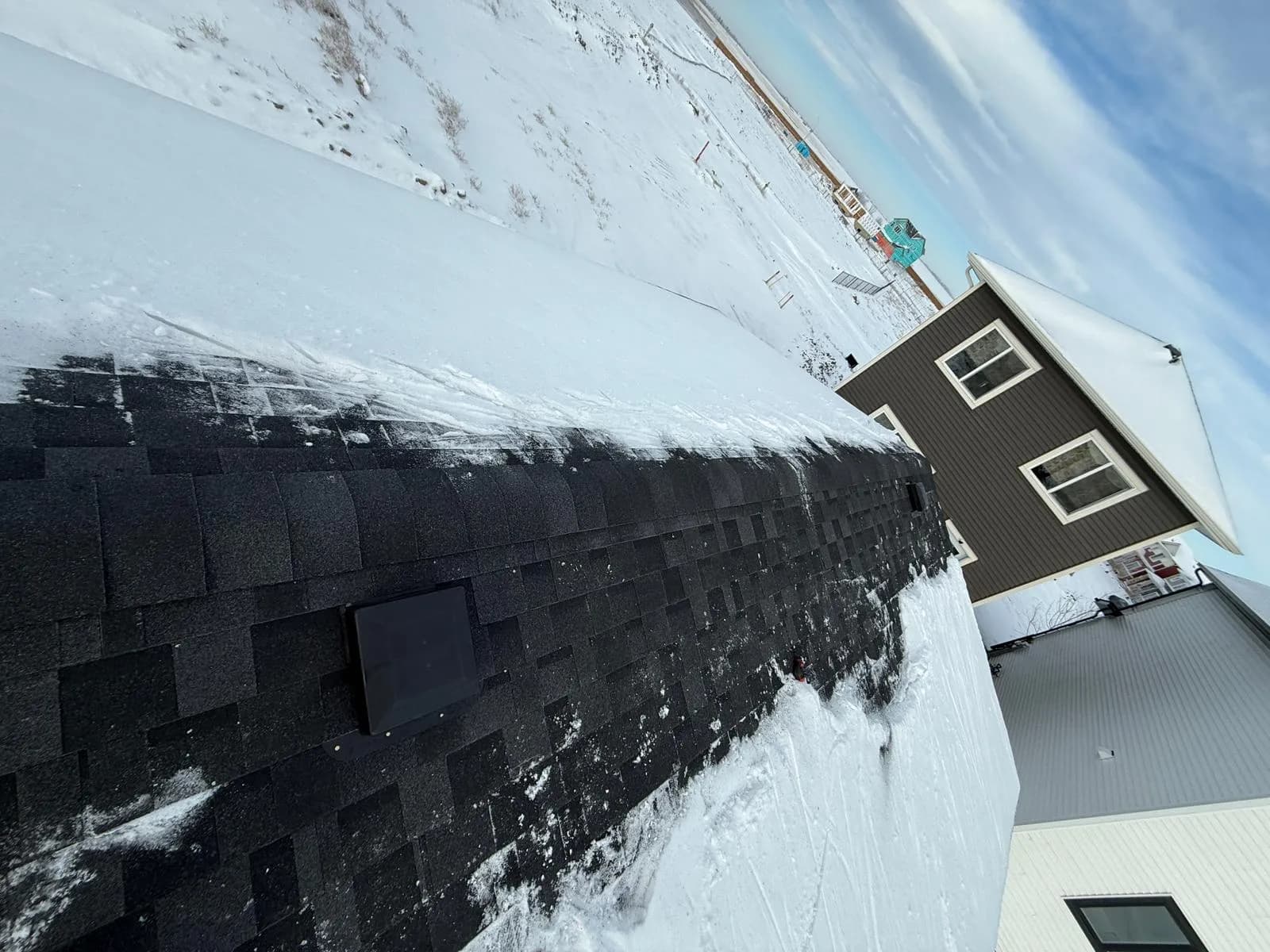
That is why the free post-storm inspection matters more than almost anything else we do. We get on the roof, look for the specific evidence an adjuster recognizes, photograph it against a scale, and tell you honestly whether there is a claim worth filing. Sometimes there is not, and we say so — an unnecessary claim on your history has a cost.
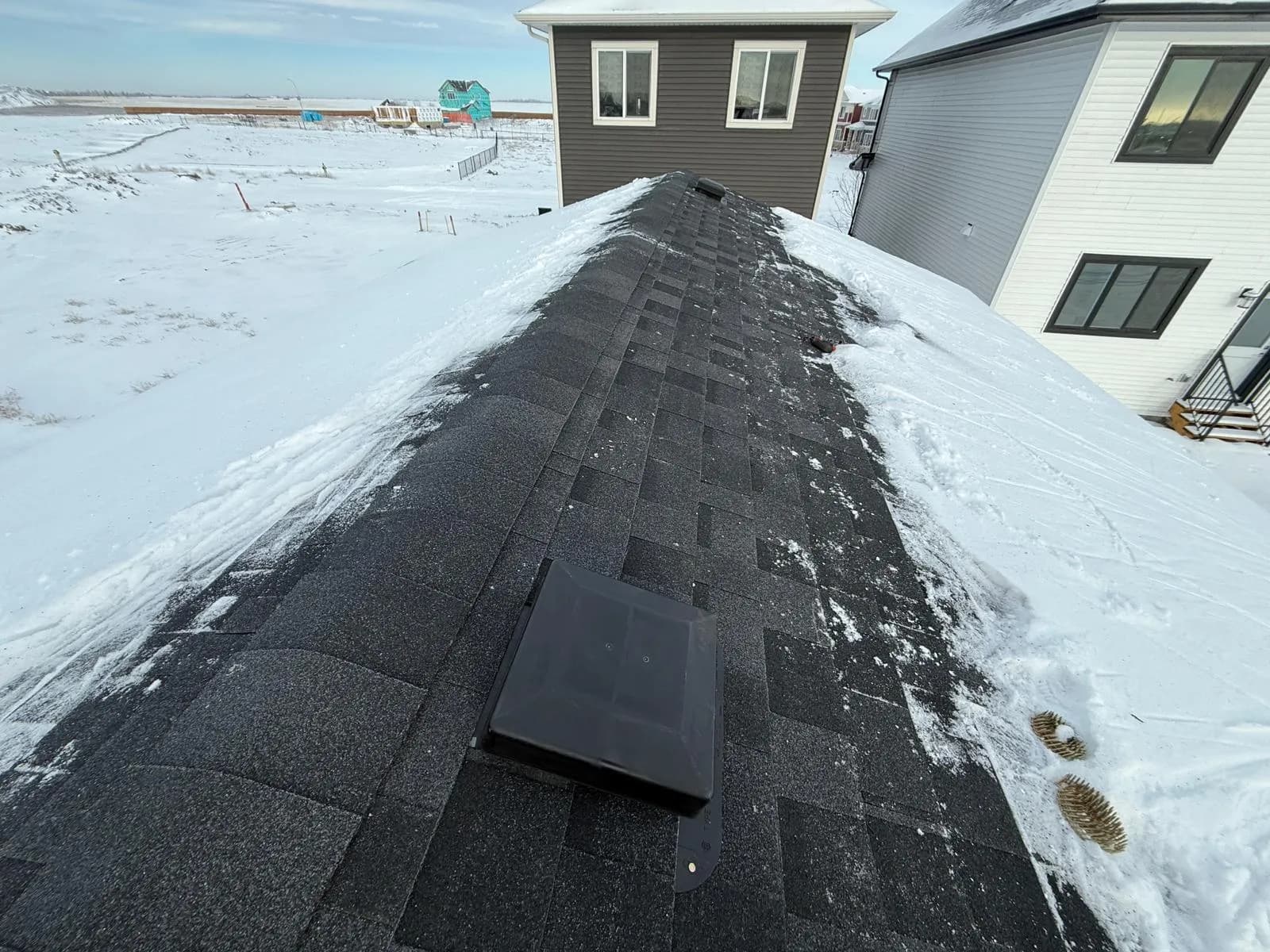
When there is, we handle the claim end of it. Documentation to the standard insurers actually accept, accurate measurements, a written scope matching the loss, and one of us on-site when the adjuster inspects so the damage is agreed in person rather than argued on paper. On most approved claims, homeowners pay only their deductible.
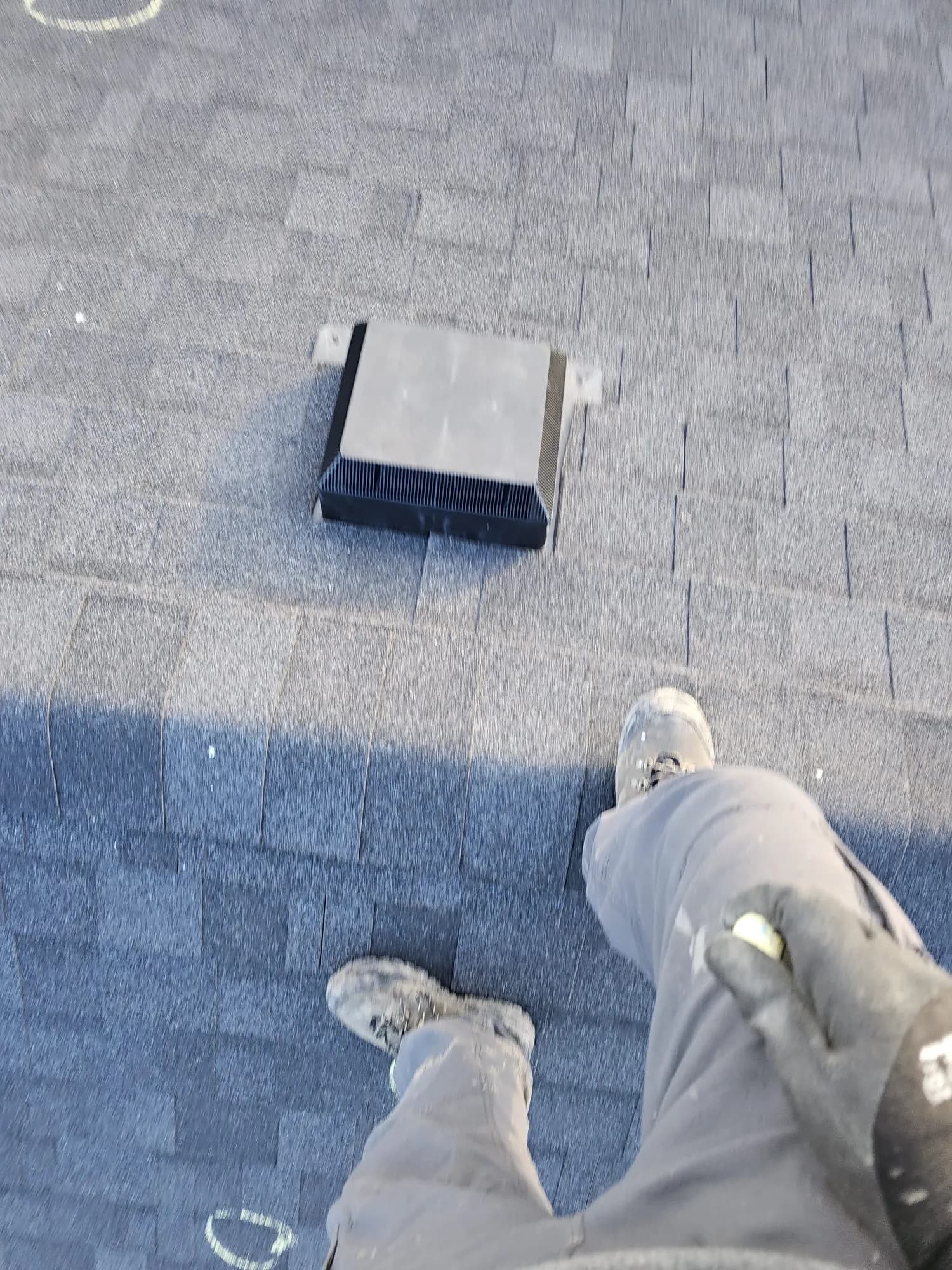
And we rebuild the whole envelope, not just the roof. Hail that bruises shingles almost always dents eavestroughs and downspouts, cracks vinyl siding on the storm-facing elevation, marks soffit and fascia, and hits the detached garage. Because we do all four trades, one contractor documents and restores the entire property.
The full guide
Everything worth knowing about storm & hail in Alberta.
What hail damage actually looks like
Homeowners look for holes. Adjusters look for bruising, and the two are completely different things.
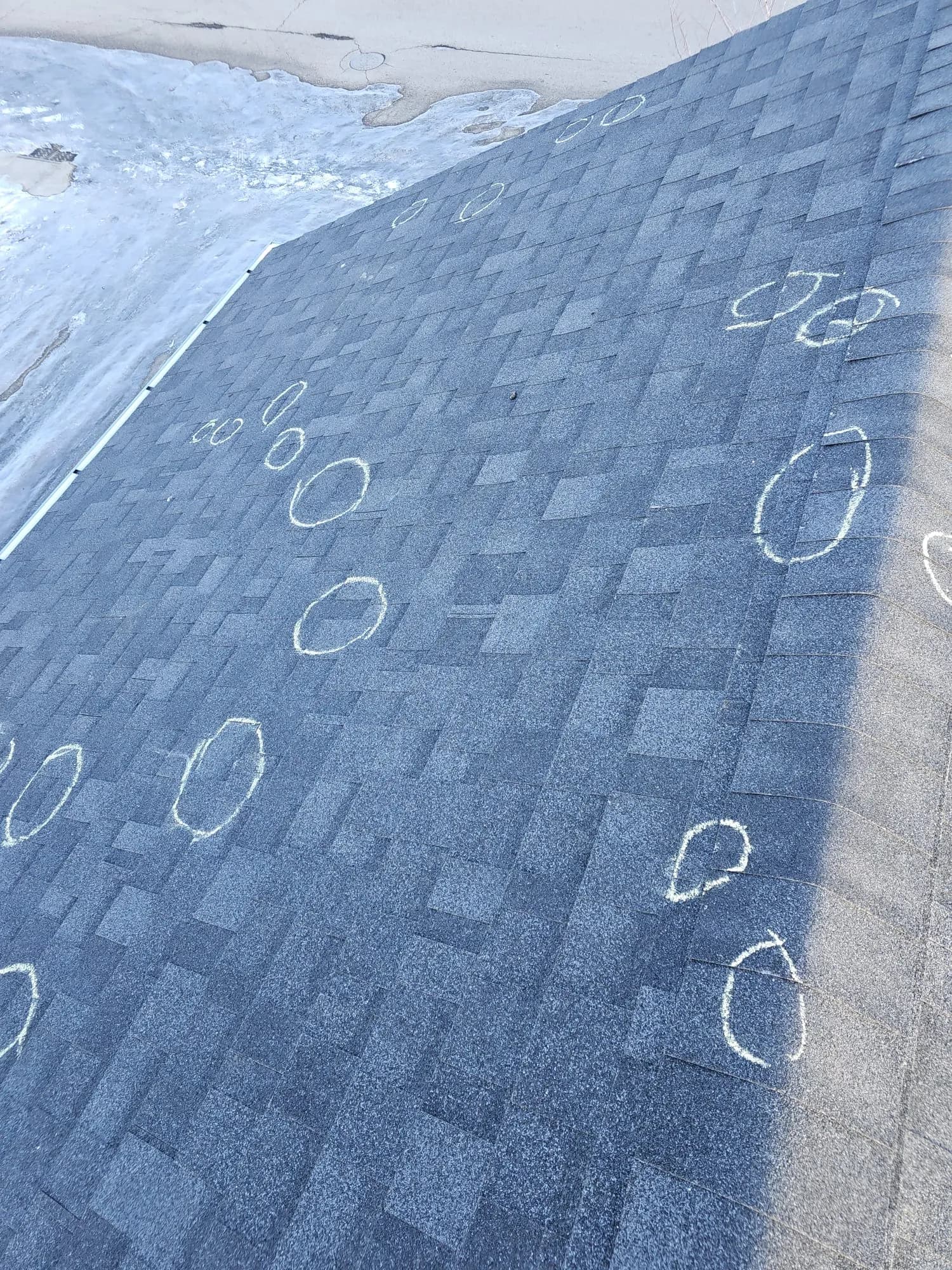
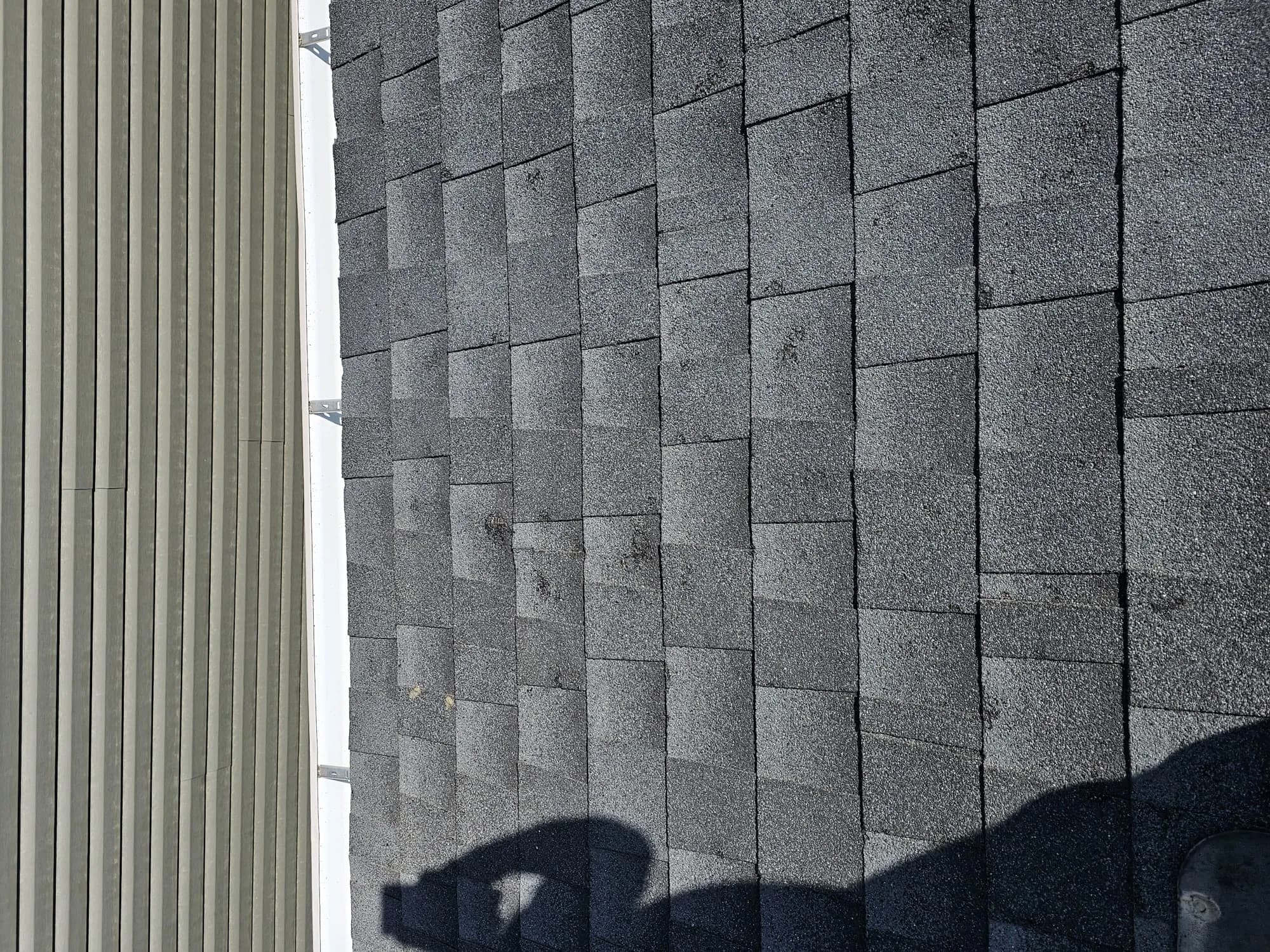
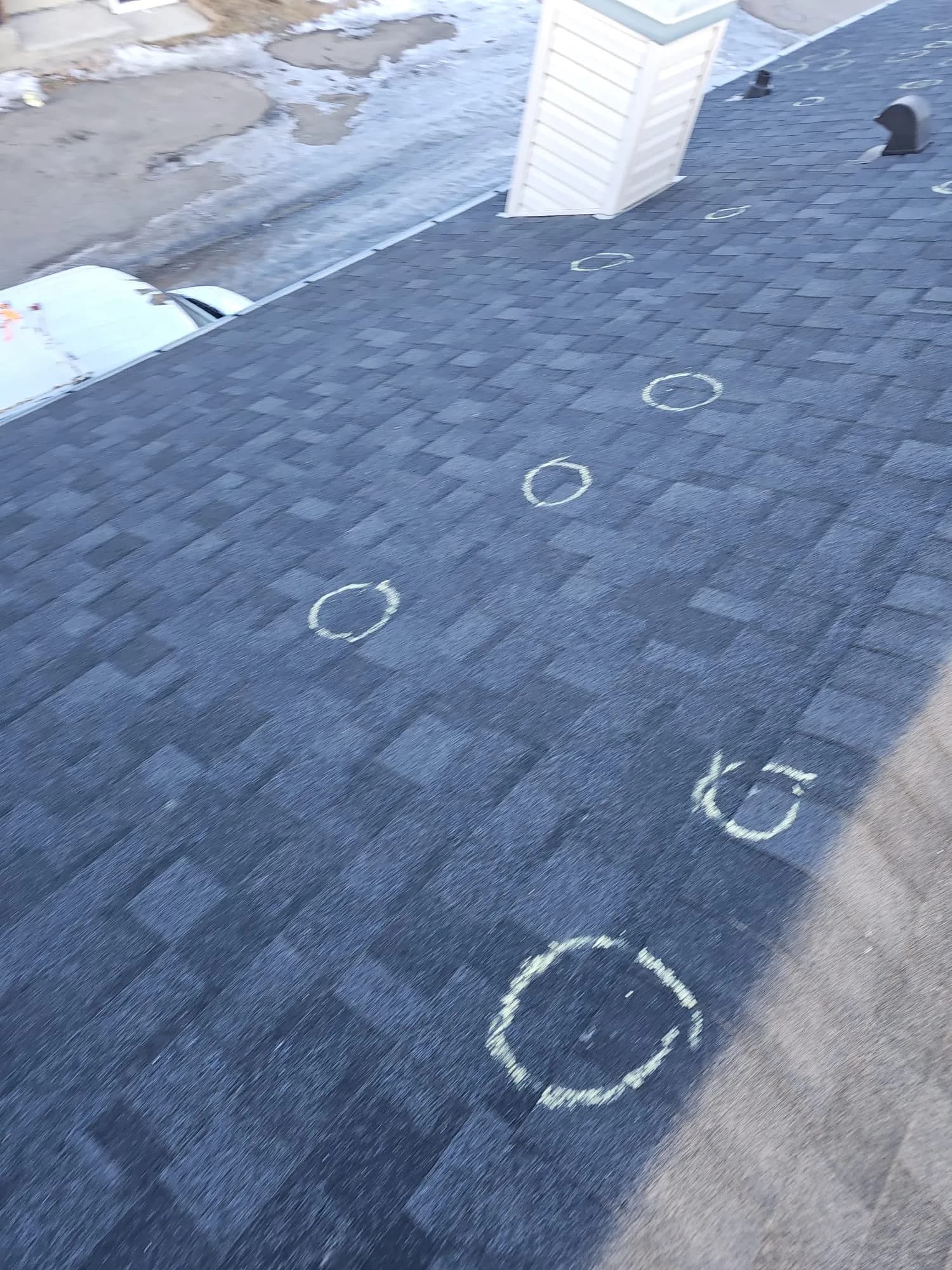
A hail bruise is a soft, slightly depressed spot where the impact fractured the fibreglass mat beneath the granule surface. It often has a shiny appearance where granules have been knocked loose, and it is soft to the touch — like a bruise on fruit. It does not leak, which is exactly why it goes unreported. Left alone, the granules around it continue to shed, the asphalt underneath is exposed to UV, and that spot becomes the failure point years later.
Granule loss is the second marker: dark patches where the mineral surface has been driven off, and a corresponding accumulation of granules in the eavestrough and at the base of the downspouts. Some granule loss is normal on any aging roof; sudden concentrated loss after a storm is not.
Cracked and split shingles are the visible end of the range, more common on older, brittle roofs and on three-tab than on newer laminates.
And then the corroborating evidence, which is often what actually settles a claim: dents in soft metals. Roof vents, flashing, eavestroughs, downspouts, garage doors, air conditioning fins and even the mailbox. Those dents establish that a hail event of a given stone size genuinely occurred at that specific address on a specific date, which is what an adjuster needs when the shingle evidence alone is ambiguous.
- Soft, shiny bruising with fractured mat beneath the granules
- Concentrated granule loss and dark exposed asphalt
- Split or cracked shingles, especially on older roofs
- Dents in vents, flashing, eavestroughs and downspouts
- Granule build-up at the bottom of downspouts
- Cracked vinyl siding on the storm-facing elevation
- Damage on the detached garage, which is often missed entirely
Wind, chinook and snow-load damage
Hail gets the attention, but it is not the only storm loss we restore. Chinook winds funnel off the Rockies at highway speeds and are hardest on the west side of the region — Springbank, Bearspaw, Cochrane, Bragg Creek, Canmore — though nowhere here is exempt.
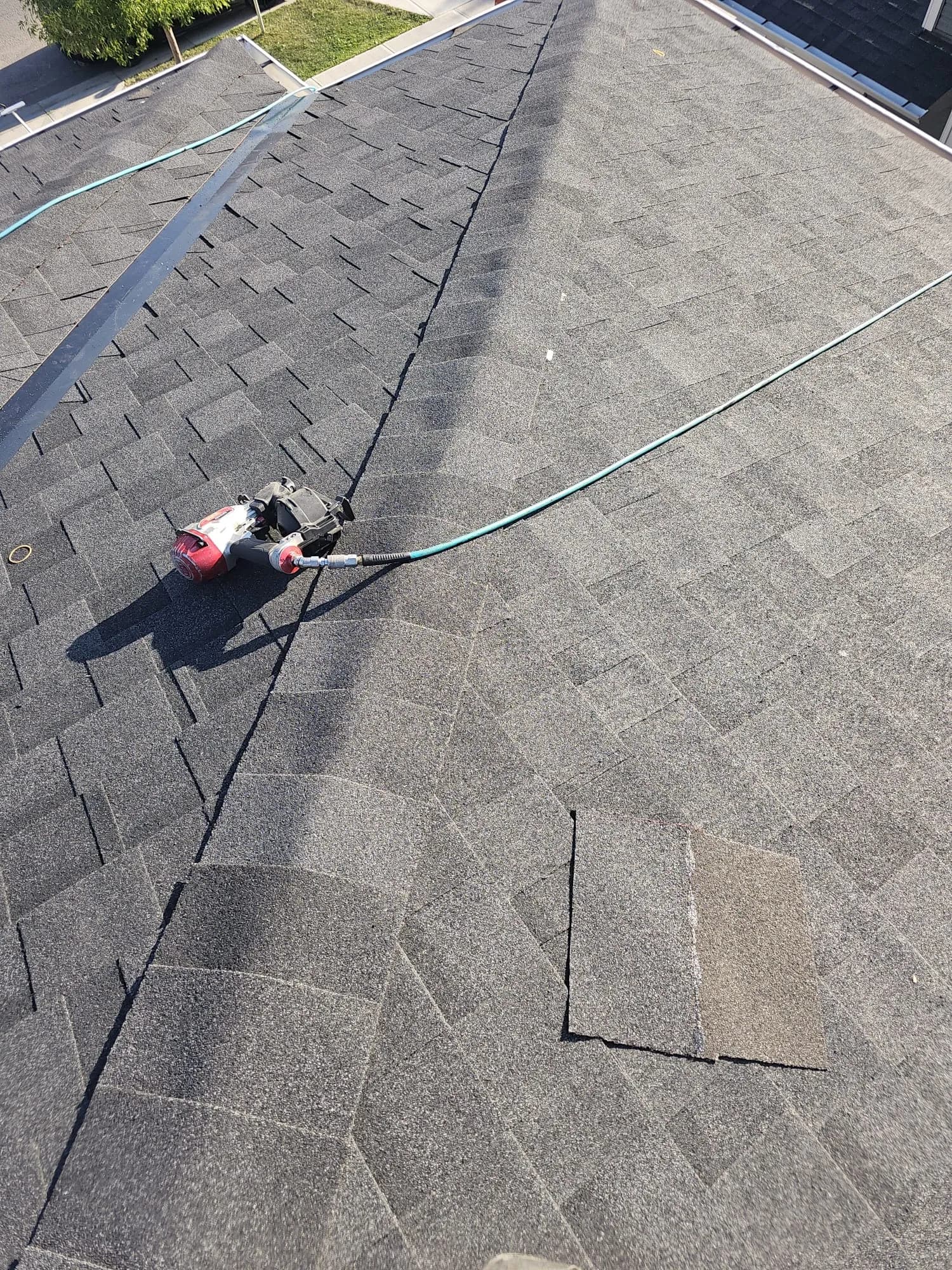
Wind damage concentrates at edges: rakes, ridges, and the first courses above the eave, where uplift pressure is highest and where a fast installer's shortcuts show. Shingles lift, crease and tear off. Creased shingles matter because they frequently look intact from the ground while the mat has broken along the fold, and they will fail there in the next event.
Wind also drives rain horizontally, which finds flashing details that perform perfectly in vertical rain. Leaks that appear only during a storm from one particular direction are almost always this.
Snow load is the slower version. Heavy accumulation sitting for weeks stresses the structure and, more commonly, drives ice damming as it melts and refreezes at the eave — which forces water back up under the shingles where no shingle is designed to resist it. That damage shows up as ceiling staining along an exterior wall in late winter, and the repair is only half the fix; the ventilation correction is the other half.
How an Alberta hail claim actually works
Step one is an inspection, before you file. We tell you honestly whether the damage is real and claim-worthy. Insurers do not cover ordinary wear, and filing on a roof that simply aged out is a claim on your record for nothing.
Step two, if it is claim-worthy, is documentation. We photograph systematically — bruising against a scale reference, granule loss, splits, and the corroborating dents in soft metals — and record the date and the storm. We take accurate measurements and write a scope describing the actual loss across roof, siding, eavestroughs and garage.
Step three is filing. You contact your insurer; we supply the evidence package. Be aware of timing: policies vary and some apply a limitation period measured from the date of the storm rather than the date you noticed the damage. Sitting on it is the most common way homeowners lose a legitimate claim.
Step four is the adjuster inspection, and it is the step where having your contractor present matters most. Two people looking at the same roof and agreeing on the damage in person prevents most disputes. Where a scope comes back short — a common outcome when an adjuster inspects quickly or from the ground — we can supplement it with the evidence rather than argue about it.
Step five is the rebuild, to the approved scope. On most approved claims, the homeowner pays only their deductible. Where you choose to upgrade beyond the approved scope — Class 4 impact-rated shingles instead of like-for-like, for instance — you pay the difference, and it is frequently worth it in a corridor that will see hail again.
Rebuilding so the next storm costs less
A storm restoration is an opportunity most homeowners do not take: the chance to put back something better than what was there, at a marginal cost rather than a full one, because the labour and mobilization are already covered.
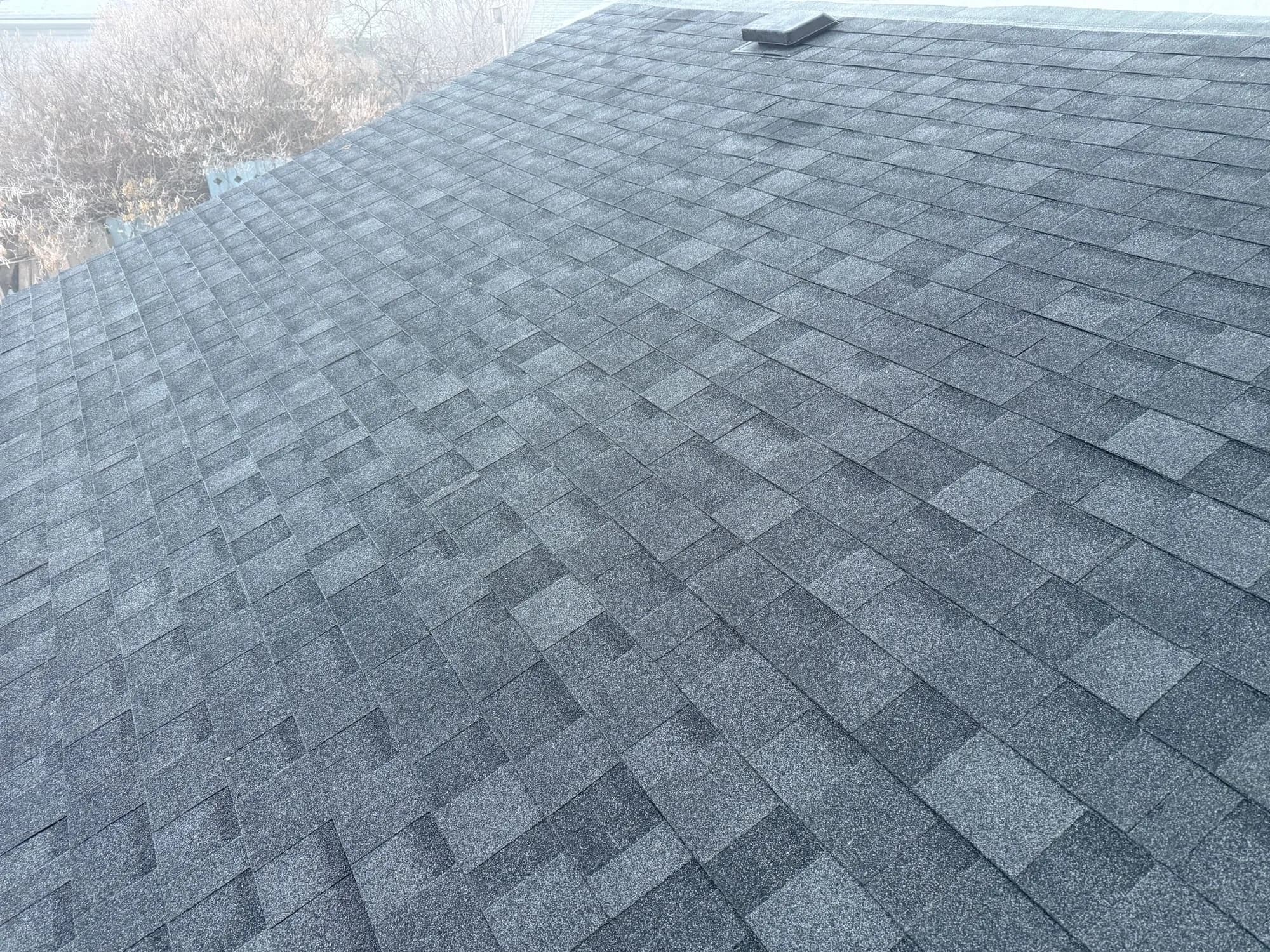
The obvious upgrade is Class 4 impact-rated shingles. Class 4 is the top rating in the UL 2218 test — a two-inch steel ball dropped twice on the same spot without the mat fracturing. In a corridor that sees damaging hail most summers, that is the difference between the next storm costing a deductible and costing nothing. Many Alberta insurers also discount premiums for impact-rated roofing, so it is worth a call to your broker while the claim is open.
The second is ventilation. Restorations happen with the roof open, which is the only cheap moment to correct intake and exhaust, clear soffit vents buried under blown-in insulation, and redirect bathroom fans that terminate into the attic. None of that is claim work, and all of it costs a fraction now versus later.
The third is doing the whole envelope at once. If the eavestroughs are dented and the siding is cracked, replacing them alongside the roof means one mobilization, one warranty, one contractor accountable — and a property where everything is the same age going forward rather than three components on three different clocks.
Storm chasers, and how to avoid them
Every significant hail event in Alberta is followed within days by out-of-province crews working door to door. Some are legitimate. Many are not, and the pattern is consistent enough to be worth naming.
The warning signs: pressure to sign immediately, an offer to waive or absorb your deductible, a request for a large deposit up front, a promise to start before the adjuster has inspected, no local address, and a phone number that will not be answered next spring. Absorbing a deductible is not a discount — it is insurance fraud, and the homeowner is a party to it.
The protections are simple. Ask for an Alberta business licence, a certificate of liability insurance and a current WCB clearance letter, and check that the company has a physical local presence and a history you can verify. Ask who provides the workmanship warranty and whether that entity will exist in five years. Get everything in writing.
We are based at 216 - 4850 Westwind Drive NE in Calgary, we are licensed, insured and WCB-covered, and the warranty on the work is ours. We will still be here for the next storm, which is more than can be said for a crew whose truck has out-of-province plates and a magnetic door sign.
Storm restoration across Calgary and Central Alberta
Hail in this region is corridor-specific rather than uniform. Some storms track across the northeast and out over Chestermere and Strathmore; others come up the west side through Springbank and Cochrane; others form north and hit the Airdrie–Crossfield–Olds–Innisfail stretch of the QEII. A homeowner three kilometres outside the track often has no damage at all while a neighbourhood inside it has claims on every street.
We inspect and restore across that whole area: every Calgary quadrant, Airdrie, Chestermere, Cochrane, Okotoks, High River, Langdon, Strathmore, Crossfield, Carstairs, Didsbury, Olds, Innisfail, Red Deer, Sylvan Lake, Canmore, Beiseker, Three Hills, Drumheller, Nanton, Diamond Valley and the acreages of Rocky View, Foothills, Mountain View and Red Deer County.
One practical note about timing. After a major event, every roofer in the affected corridor books out within days and material supply tightens for weeks. If a storm crossed your area, get the inspection early even if you intend to do nothing immediately — it establishes the damage with a defensible date, keeps your claim options open, and puts you near the front of the schedule rather than the back.
Storm & Hail across Calgary & Central Alberta
Plus: Acme, Aldersyde, Ardenode, Arrowwood, Balzac, Banff, Bassano, Benchlands, Bergen, Black Diamond, Blackfalds, Blackie, Bottrel, Bowden, Carbon, Caroline, Carseland, Cayley, Champion, Cheadle, Claresholm, Cluny, Cochrane Lake, Conrich, Cremona, Dalroy, Dead Man's Flats, Delacour, Delburne, Dewinton, Dickson, Dogpound, Eckville, Eden Valley, Elbow Valley, Elnora, Ensign, Exshaw, Ghost Lake, Gleichen, Harmony, Harvie Heights, Heritage Pointe, Hussar, Huxley, Indus, Irricana, James River Bridge, Janet, Kananaskis Village, Kathyrn, Lac des Arcs, Linden, Longview, Lyalta, Madden, Markerville, Millarville, Milo, Morley, Morrin, Mossleigh, Munson, Namaka, Nightingale, Parkland, Penhold, Pine Lake, Priddis, Priddis Greens, Queenstown, Red Deer Lake, Redwood Meadows, Rocky Mountain House, Rockyford, Rosebud, Siksika Nation, Springbrook, Spruce View, Standard, Stavely, Swalwell, Torrington, Trochu, Tsuut'ina Nation, Turner Valley, Vulcan, Waiparous, Water Valley, Wimborne — and the surrounding Rocky View, Foothills, Mountain View, Wheatland, Kneehill and Red Deer county acreages.
Questions
Storm & Hail Damage Roofing FAQ
How do I know if my roof has hail damage?
+
You usually can't tell from the ground, and it will not be leaking. What an inspector looks for is bruising — soft, shiny spots where the impact fractured the mat under the granules — plus concentrated granule loss, split shingles, and corroborating dents in soft metals like vents, flashing and eavestroughs. If a significant storm crossed your area, book a free inspection.
Do you help with the insurance claim?
+
Yes, it is a core part of what we do. We inspect and photo-document the damage to the standard adjusters accept, prepare accurate measurements and a written scope, meet your adjuster on-site and walk the roof with them, and handle the paperwork. On most approved claims you pay only your deductible.
Should I file the claim before or after you inspect?
+
Have us inspect first. We will confirm whether the damage is real and claim-worthy so you are not opening a claim for nothing — insurers do not cover ordinary wear, and an unnecessary claim on your history has a cost. If it is legitimate, we document it properly and walk you through filing.
How long do I have to file a hail claim in Alberta?
+
Policies vary, and some insurers apply a limitation period measured from the date of the storm rather than the date you noticed the damage. Sitting on it is the most common way a legitimate claim is lost. Get the inspection while the evidence is fresh and the date is easy to establish.
Will filing a hail claim raise my premium?
+
That depends on your policy and history, and it is a question for your broker. What we can say is that hail is generally treated as a weather event rather than something you caused, and that leaving real damage unrepaired can create larger problems later — including difficulty with a future claim on a roof an insurer says was already compromised.
Does hail damage the siding and eavestroughs too?
+
Very often, and it is routinely left off claims because nobody inspected it. Hail that bruises shingles usually dents eavestroughs and downspouts, cracks vinyl siding on the storm-facing elevation, and hits the detached garage. We inspect and document the whole envelope as one loss, which is materially easier for an adjuster to approve than three trades filing separately.
Someone offered to cover my deductible. Is that allowed?
+
No. Absorbing or waiving a homeowner's deductible is insurance fraud in Alberta, and it makes the homeowner a party to it. It is also the single clearest signal that the company offering it will not be around when the warranty is needed.
Can I upgrade to impact-rated shingles on a claim?
+
Usually yes. The insurer funds a like-for-like restoration and you pay the difference to upgrade — commonly to Class 4 impact-rated shingles, which resist the next storm and often qualify for an insurance premium discount. In this hail corridor it is frequently the best money spent during a claim.
Do you do emergency tarping after a storm?
+
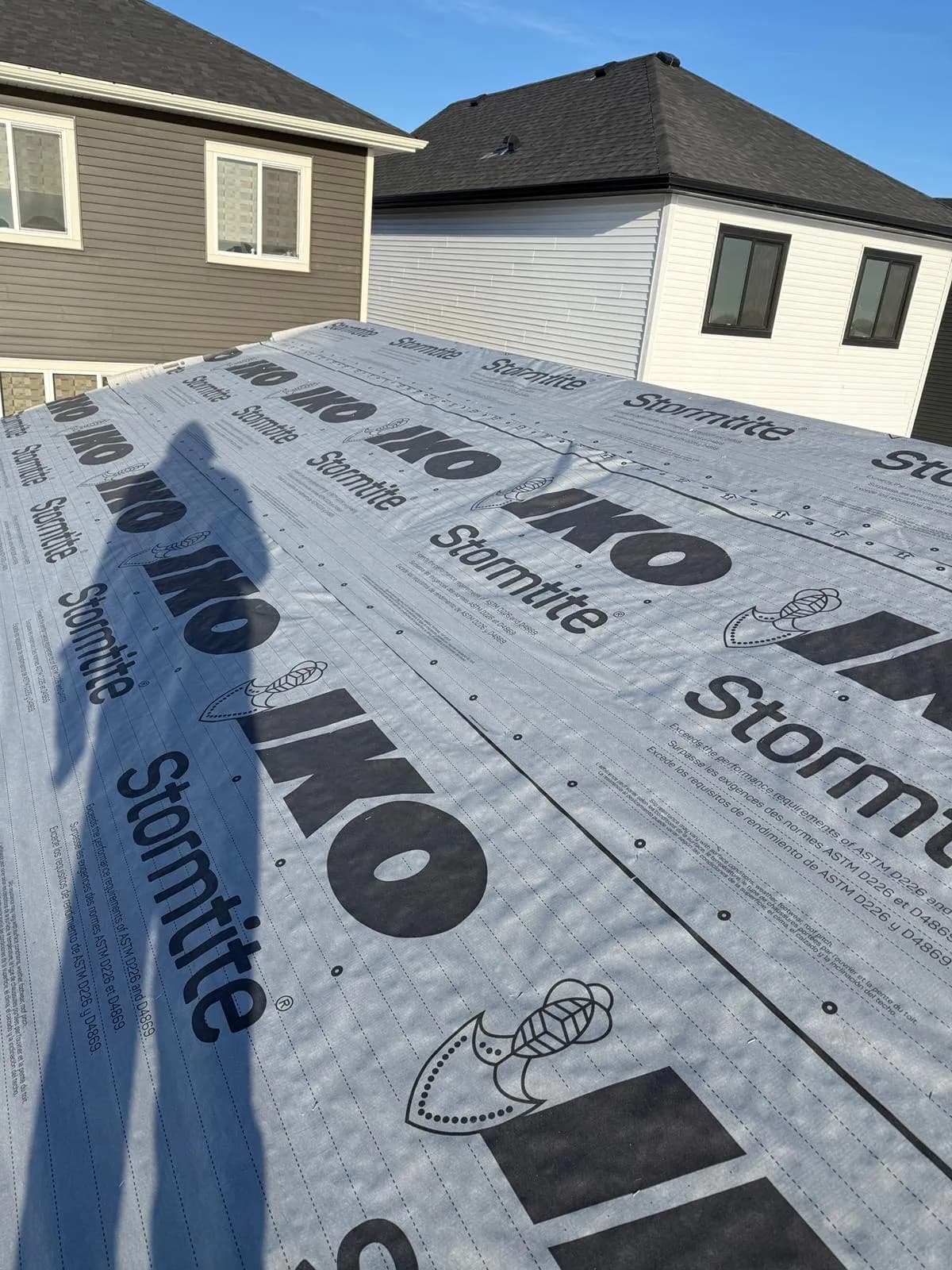
Yes, and it is triaged ahead of scheduled work. We fasten a proper temporary cover so the interior stops taking damage, and we photograph the damage before covering it — your insurer will want those images to establish cause and extent.
How soon should I book after a storm?
+
Immediately, even if you plan to do nothing. After a major event every roofer in the corridor books out within days and materials tighten for weeks. An early inspection documents the damage with a defensible date and puts you near the front of the schedule.
Related services
We also handle
Our work
Storm & Hail Damage Roofing & more
Free inspection
Get your storm & hail quote
No pressure · No surprises
Ready to move on your storm & hail project?
Free on-site inspection, honest written quote, and full insurance-claim support if you need it.