

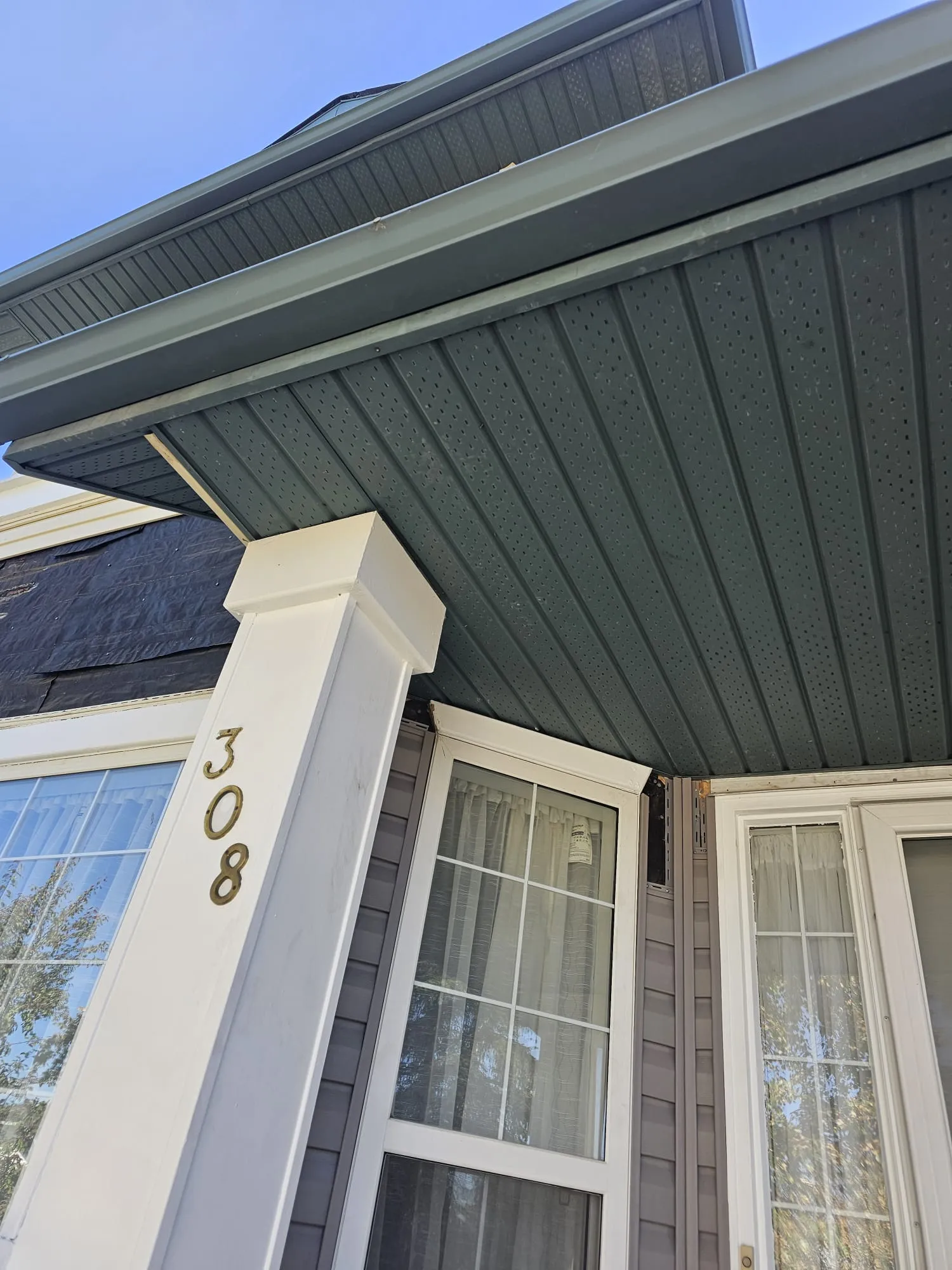
Eavestroughs · Calgary & Area
Gutter Guards & Leaf Protection
Leaf protection where tree cover justifies it — and an honest 'you don't need this' where it doesn't
Eavestroughs
Gutter Guards & Leaf Protection done right, the first time.
Gutter guards are worth exactly as much as the tree cover above your roof. Under mature elms, poplars and spruce they pay for themselves in avoided cleanings and avoided winter ice damage. On a new suburban lot with young landscaping, they are an unnecessary expense and we will say so. Where they are worth it, we match the guard style to what is actually falling on your roof and install it without compromising the shingles beneath.
More about gutter guards
Built for Calgary's weather & homes.
Gutter guards are one of the most oversold products in the exterior trades, and one of the genuinely useful ones in the right situation. Our position is straightforward: they are worth exactly as much as the tree cover above your roof, and we would rather tell you that than sell you a system you do not need.
Under mature elms, poplars and spruce — the established streets in Elbow Park, Mount Royal, Britannia, Renfrew, Bowness, Bridgeland, Riverdale, and plenty of older lots across Cochrane, Okotoks and the acreage communities — guards pay for themselves. Not primarily in avoided cleanings, though those add up, but in avoided winter damage. A trough that clogs in October freezes into a solid block in November, and the weight and expansion of that ice is what tears eavestrough and fascia off a house.
On a newer suburban lot with young landscaping and nothing overhanging the roof, guards are optional. Twice-yearly cleaning does the same job for a fraction of the cost. We will say so, and we will still clean the troughs for you.
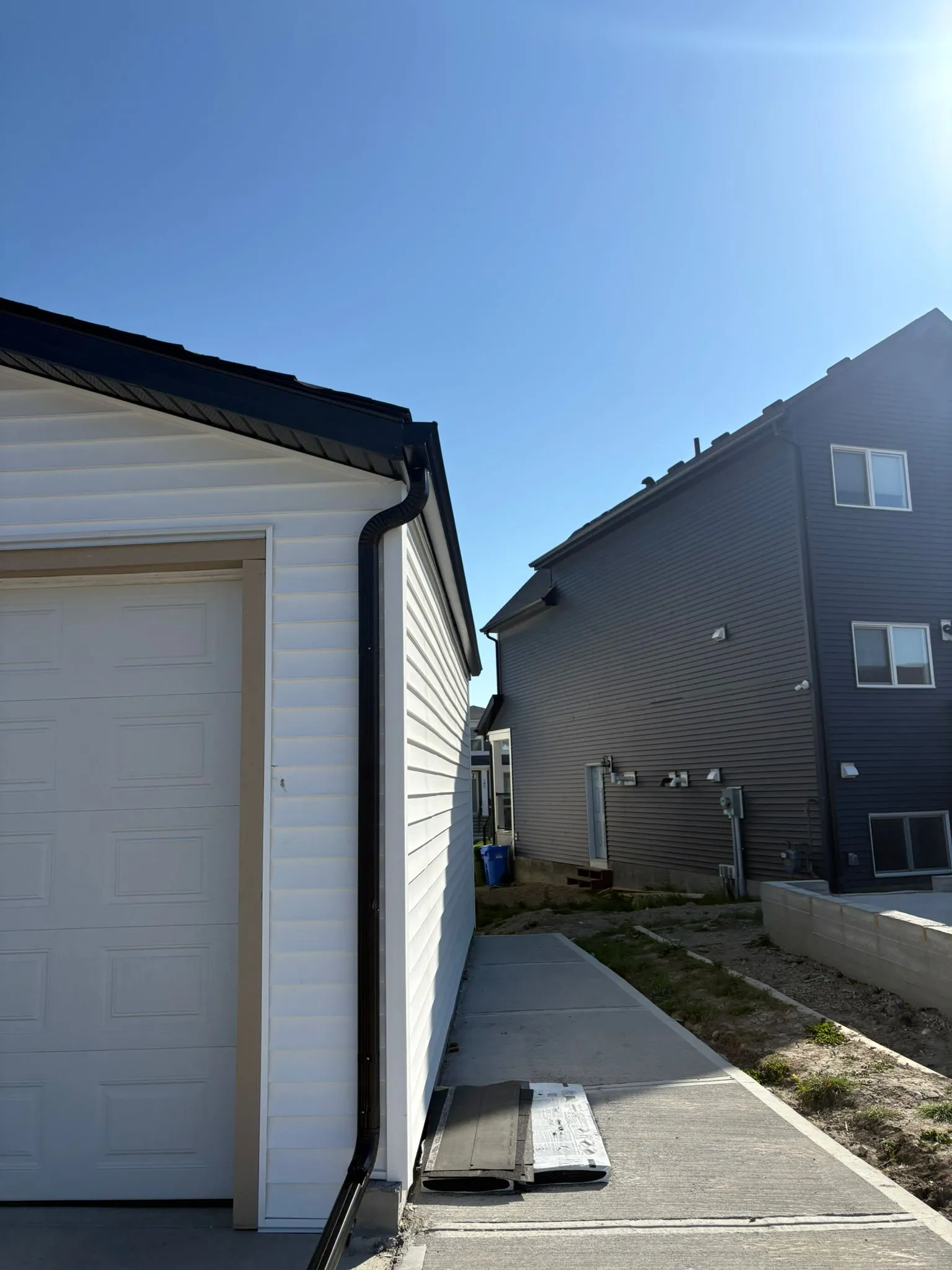
Where guards are worth it, the style genuinely matters and it depends on what is falling. Fine stainless micro-mesh keeps out everything down to pine needles and shingle granules, which is what you need under conifers. Perforated aluminum handles leaves at a lower price point and is fine under deciduous cover. Foam and brush inserts we generally avoid, because they trap debris inside the trough where you cannot see it — converting a visible problem into a hidden one.
One thing no guard does is eliminate maintenance. Any contractor promising a system you never touch again is overselling. A good guard converts a twice-a-year clean-out into an occasional rinse and inspection, which under heavy tree cover is an excellent trade — and without tree cover is an expensive way to buy nothing.
The full guide
Everything worth knowing about gutter guards in Alberta.
Do you actually need gutter guards?
Look up, not at a brochure. The question is what is overhanging your roof and what it drops.
Mature poplar and cottonwood are the strongest case in this city. They drop catkins and fluff in early summer and a heavy leaf load in fall, and both pack into a trough densely enough to block flow completely. Elms drop a huge volume of small leaves plus seed samaras in spring, which are small enough to get through most coarse guards and are one of the main arguments for micro-mesh where elms are present.
Spruce and pine are the other strong case and are frequently underestimated. Needles fall year-round rather than seasonally, they are small, and they mat together into a felt that water will not pass. Conifers essentially require fine micro-mesh; a coarse perforated guard passes needles straight through.
Birch, ash and maple sit in the middle: a real seasonal leaf load, handled adequately by perforated aluminum.
And a category people forget entirely: your own roof. An aging asphalt roof sheds granules continuously, and they collect in the trough and at the base of downspouts. Micro-mesh catches them; coarse guards do not. If your roof is near the end of its life, that is worth factoring in — though if it is that close, replacing the roof and the trough together is usually the better decision.
If nothing overhangs your roof, you do not need guards. That is a complete answer and it is the one we give regularly.
- Spruce and pine needles — micro-mesh, essentially required
- Elm seeds and small leaves — micro-mesh
- Poplar fluff and heavy fall leaf load — micro-mesh or fine perforated
- Maple, birch, ash — perforated aluminum is sufficient
- Aging asphalt roof shedding granules — micro-mesh
- New lot, no overhanging trees — you do not need guards
The guard types, and what each is honestly good at
Stainless micro-mesh is the premium option and the one we install most. A fine woven stainless screen over a rigid frame sits across the trough opening; water passes through the mesh and everything solid stays on top, where wind and rain move most of it off. It handles needles, seeds and granules, which nothing coarser does. The limitation worth naming: heavy pollen and fine dust can film over the mesh in spring, and it needs an occasional rinse to clear. Anyone claiming otherwise has not maintained one.
Perforated aluminum is the value option — a solid panel with punched holes, in matching colour. It stops leaves reliably and costs meaningfully less. It will pass needles and small seeds, so it belongs under deciduous cover, not conifers.
Reverse-curve or surface-tension guards work on the principle that water clings around a curved lip while debris falls past. In practice they perform inconsistently in heavy downpours — which in Calgary is the rain that actually matters — and they can shed water past the trough entirely in a hard rain.
Foam inserts and brush inserts fill the trough with material that debris settles into. They are cheap and fast to fit, and we generally do not recommend them: the debris ends up inside the trough where it holds moisture, and clearing it means pulling the entire insert out. It converts a visible maintenance task into a hidden one.
The install detail that matters most across all types is that a guard must not require lifting the shingles to fit. Some products are designed to slide under the first shingle course, which disturbs the roof edge, can void a shingle manufacturer's warranty, and in a climate with ice damming creates a genuine water-entry path. We fit guards to the trough, not to the roof.
What guards actually prevent
The obvious benefit is not having to get on a ladder twice a year, and for a three-storey house or a steep-sited property that alone is worth real money — falls from ladders are the most common serious home-maintenance injury there is.
The larger benefit is winter. A trough packed with wet leaves in November does not drain; it freezes solid. That block of ice weighs far more than the trough was designed to carry, it expands into the joints and hangers, and it is the single most common reason eavestrough tears away from fascia in this climate. Guards keep the trough draining into freeze-up, which keeps the mass down.
Third is fascia and foundation protection. A clogged trough overflows, and a good share of that overflow goes over the back of the trough rather than the front — down the fascia board, which rots it, and straight into the ground at the base of the wall, which is exactly where you do not want concentrated water on clay soil.
Fourth, and specific to conifers, is downspout blockage. Needles that get into a trough migrate to the outlet and mat there. A blocked downspout is invisible until the trough overflows, and it is the failure that surprises people most.
What guards do not prevent: ice dams. Those are caused by heat escaping into the attic and have nothing to do with the trough. Any guard sold as an ice-dam solution is being mis-sold.
Installation, and the cleaning that comes first
Guards go on a clean, sound, correctly pitched trough or they go on badly. So the job starts with the trough, not the guard.
We clear the entire system — trough and downspouts — and flush it to confirm flow. Then we check the pitch, because a trough that has been holding standing water needs re-pitching before anything is fitted over it; sealing a guard over a trough that does not drain hides the problem permanently. We check the hangers and the fascia behind them, since guards add a small amount of weight and any hanger already marginal will not improve.
Then the guard is fitted to the trough profile — 5-inch and 6-inch take different sizes — secured to the trough itself rather than under the shingles, and colour-matched where the product allows.
Most homes are a half day to a day. We will tell you at the inspection if the existing trough is not worth guarding, which happens: sectional gutter at the end of its life, or trough hung on failing fascia, is money better spent on replacement than on protecting what is already going.
Ongoing, expect to look at them once a year rather than clean them twice. Micro-mesh under spruce or in a heavy pollen year benefits from a hose rinse. That is the realistic maintenance picture, and it is a very good trade under trees.
Gutter guards across Calgary and Central Alberta
The strongest case in this region is the mature inner-city canopy. Calgary's older neighbourhoods carry some of the largest elms and poplars in the province, and homes in Elbow Park, Mount Royal, Britannia, Rideau Park, Renfrew, Bridgeland, Bowness, Hillhurst and Sunnyside deal with a debris load that suburban homeowners would not believe.
The second-strongest case is acreage and foothills properties with conifer cover — Bragg Creek, Redwood Meadows, Priddis, Millarville, Springbank, Elbow Valley, Bearspaw, Cochrane Lake, Water Valley, Sundre and throughout the Bow Valley around Canmore, Exshaw and Dead Man's Flats. Spruce and pine needle drop is relentless and year-round, and those properties are also the hardest to get a ladder to safely.
The third is any tall or awkward house where cleaning is genuinely dangerous — three-storey elevations, walkout lots where the back of the house is effectively four storeys above grade, and steep hillside sites in places like Patterson, Cougar Ridge, Sunnyside and the Cochrane hillsides.
Where we routinely advise against guards: new suburban builds in Livingston, Cornerstone, Seton, Rangeview, Alpine Park and the newer subdivisions in Airdrie, Chestermere and Okotoks, where the landscaping is young and nothing overhangs the roof. Come back in fifteen years when the trees have grown in and it will be a different conversation.
Gutter Guards across Calgary & Central Alberta
Plus: Acme, Aldersyde, Ardenode, Arrowwood, Balzac, Banff, Bassano, Benchlands, Bergen, Black Diamond, Blackfalds, Blackie, Bottrel, Bowden, Carbon, Caroline, Carseland, Cayley, Champion, Cheadle, Claresholm, Cluny, Cochrane Lake, Conrich, Cremona, Dalroy, Dead Man's Flats, Delacour, Delburne, Dewinton, Dickson, Dogpound, Eckville, Eden Valley, Elbow Valley, Elnora, Ensign, Exshaw, Ghost Lake, Gleichen, Harmony, Harvie Heights, Heritage Pointe, Hussar, Huxley, Indus, Irricana, James River Bridge, Janet, Kananaskis Village, Kathyrn, Lac des Arcs, Linden, Longview, Lyalta, Madden, Markerville, Millarville, Milo, Morley, Morrin, Mossleigh, Munson, Namaka, Nightingale, Parkland, Penhold, Pine Lake, Priddis, Priddis Greens, Queenstown, Red Deer Lake, Redwood Meadows, Rocky Mountain House, Rockyford, Rosebud, Siksika Nation, Springbrook, Spruce View, Standard, Stavely, Swalwell, Torrington, Trochu, Tsuut'ina Nation, Turner Valley, Vulcan, Waiparous, Water Valley, Wimborne — and the surrounding Rocky View, Foothills, Mountain View, Wheatland, Kneehill and Red Deer county acreages.
Questions
Gutter Guards & Leaf Protection FAQ
Are gutter guards worth it in Calgary?
+
It depends entirely on what is above your roof. Under mature elms, poplars or spruce, yes — they pay for themselves in avoided cleanings and, more importantly, in avoided winter ice damage. On a new suburban lot with young landscaping and nothing overhanging, no. We will tell you which you are.
Which type of gutter guard is best?
+
Stainless micro-mesh for conifer needles, elm seeds and shingle granules. Perforated aluminum for leaf-dominant deciduous cover at a lower price. We avoid foam and brush inserts, which trap debris inside the trough where you cannot see it, and reverse-curve guards, which shed water past the trough in the heavy downpours that matter here.
Do gutter guards mean I never have to clean my gutters again?
+
No, and anyone promising that is overselling. A good guard converts a twice-a-year clean-out into an annual look and an occasional rinse — micro-mesh can film over with heavy pollen in spring. Under trees that is an excellent trade; without trees it is an expensive way to buy nothing.
Will gutter guards stop ice dams?
+
No. Ice dams are caused by heat escaping into the attic, melting roof snow that refreezes at the cold eave. Guards help by keeping the trough draining so the ice mass stays smaller, but the actual fix is attic ventilation and insulation — which we also do.
Can gutter guards damage my roof or void my shingle warranty?
+
Some products can. Guards designed to slide under the first shingle course disturb the roof edge, may void the shingle manufacturer's warranty, and in an ice-damming climate create a water-entry path. We fit guards to the trough, not under the shingles.
Do guards work with 6-inch eavestrough?
+
Yes — guards come sized for both 5-inch and 6-inch profiles. If you are upsizing your trough anyway, doing both at once is cheaper than fitting guards later.
Will guards handle spruce and pine needles?
+
Only fine micro-mesh will. Needles pass straight through perforated and coarse guards and then mat at the downspout outlet, which is the failure that surprises people because it is invisible until the trough overflows. Under conifers, micro-mesh is effectively the only option.
Do you clean the eavestroughs before installing guards?
+
Always. We clear the trough and downspouts, flush the system to confirm flow, check the pitch and re-pitch if it has been holding water, and inspect the hangers and fascia. Fitting a guard over a trough that does not drain hides the problem permanently.
How much do gutter guards cost?
+
It varies with the linear footage, the guard style, the trough size and the number of storeys. Micro-mesh costs meaningfully more than perforated aluminum and is worth it under conifers and elms. We quote after seeing what is actually growing over your roof.
What if my eavestroughs are old — should I guard them or replace them?
+
If they are sectional, sagging, or hung on soft fascia, replacement is the better spend and we will say so. Guarding a system at the end of its life protects something you are about to remove.
Related services
We also handle
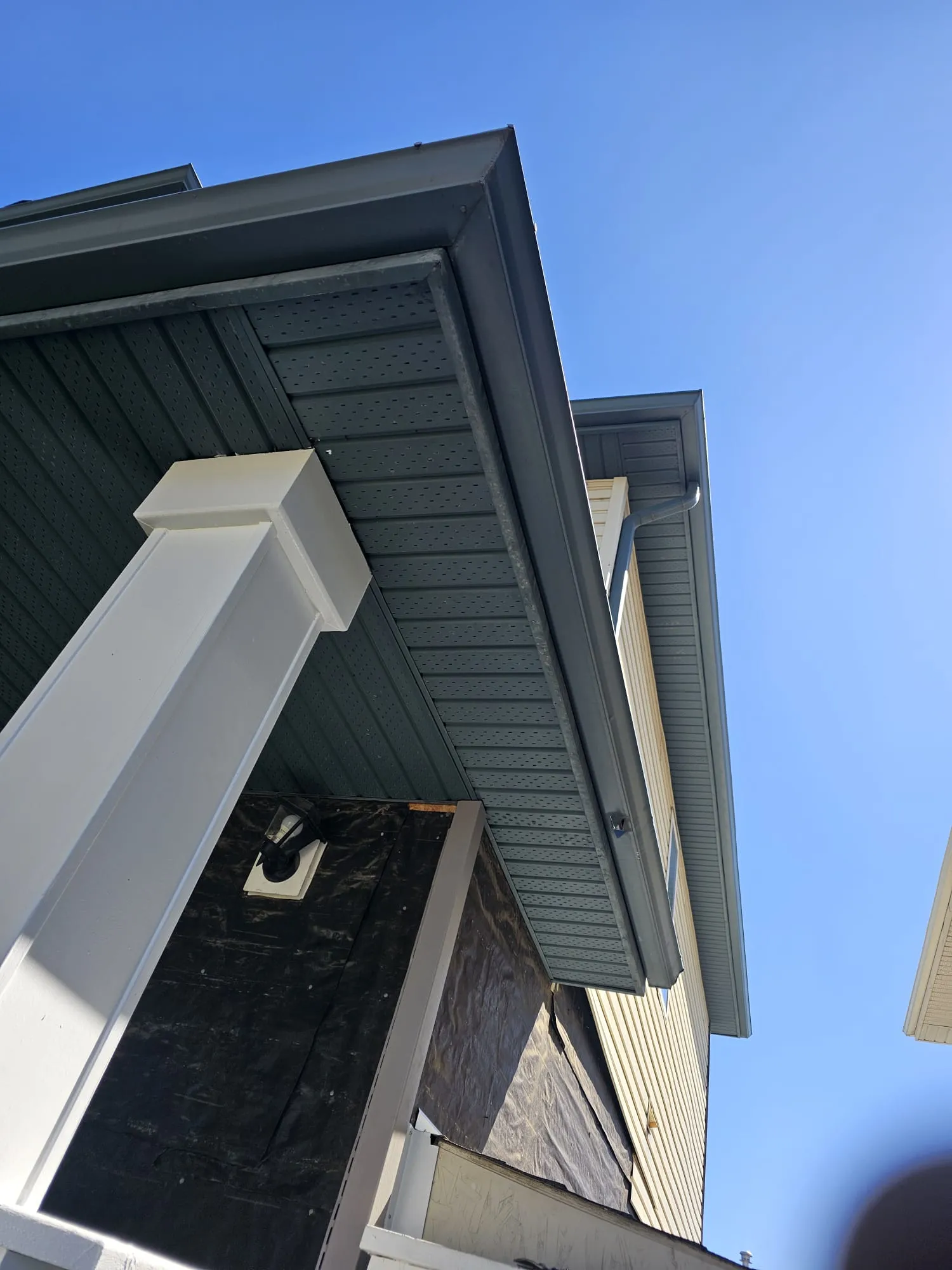
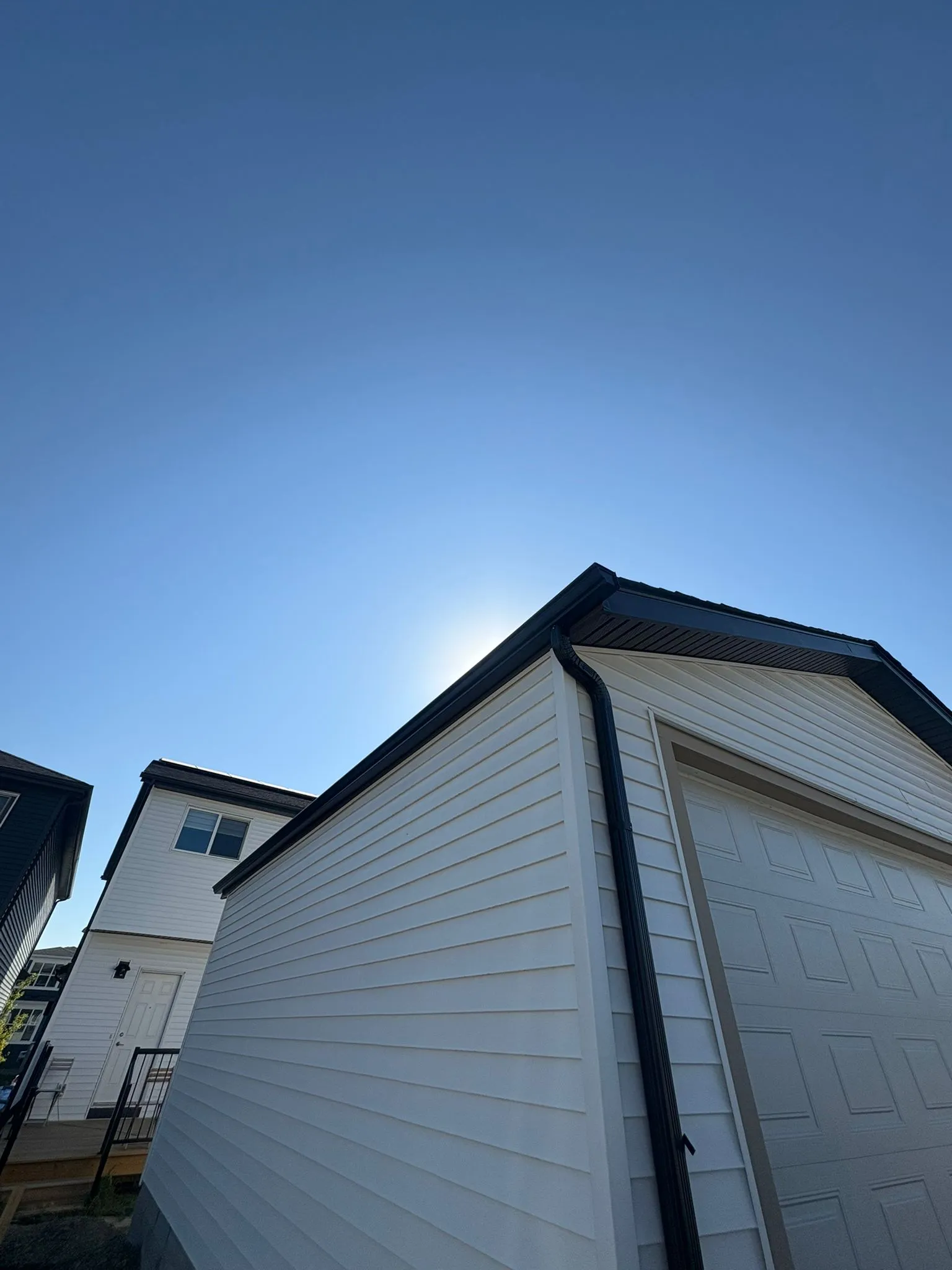
Our work
Gutter Guards & Leaf Protection & more
Free inspection
Get your gutter guards quote
No pressure · No surprises
Ready to move on your gutter guards project?
Free on-site inspection, honest written quote, and full insurance-claim support if you need it.