
Siding · Calgary & Area
Soffit & Fascia
The eave line done as one assembly — vented soffit, sound fascia, and an attic that can finally breathe
Siding
Soffit & Fascia done right, the first time.
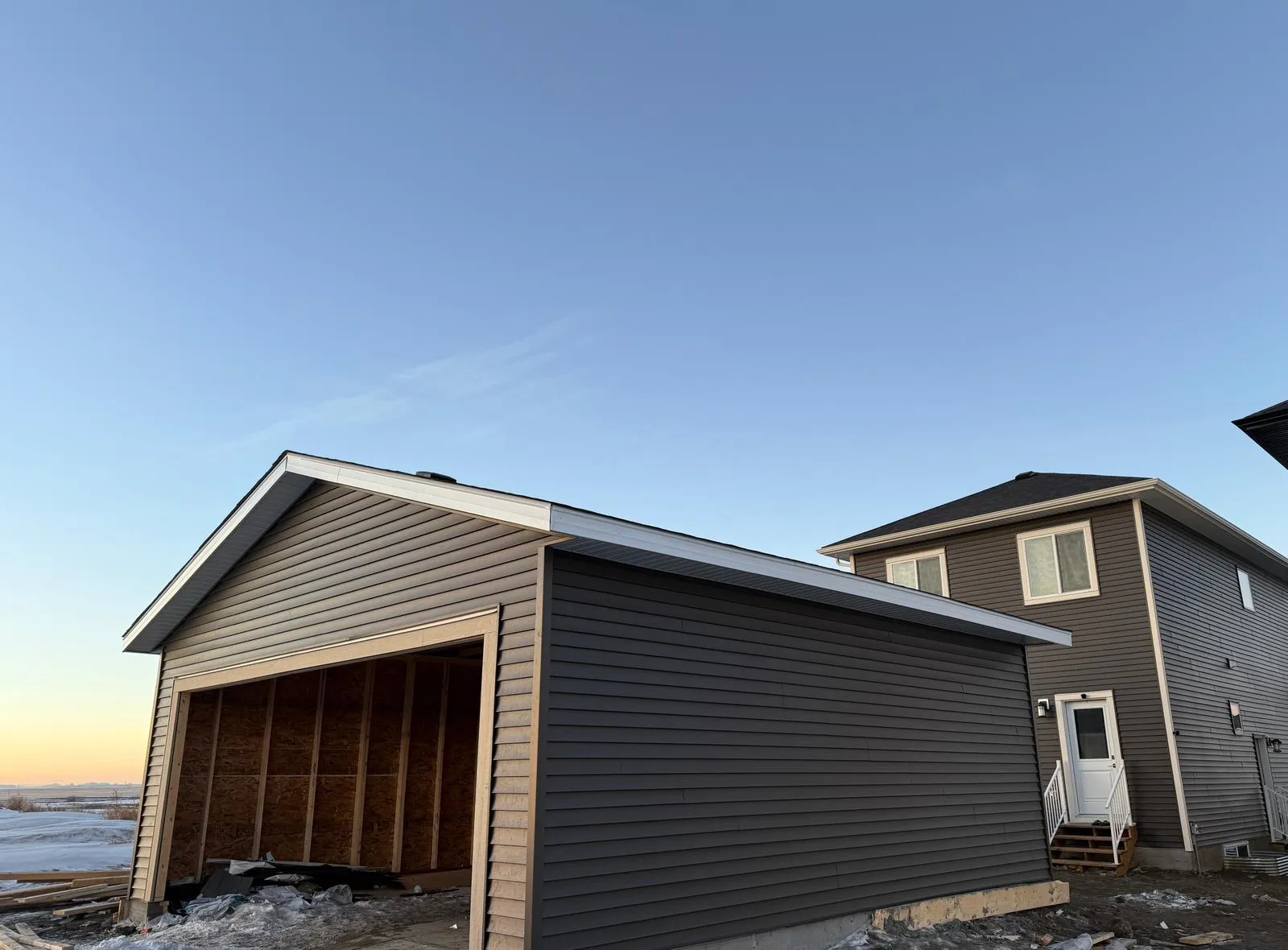
Soffit and fascia are the parts of a house homeowners think about least and the parts that fail first. Fascia carries your eavestroughs; soffit feeds your attic the intake air that keeps the roof deck cold. We replace rotten fascia and sub-fascia, install genuinely vented soffit with the intake path actually open, correct the drip edge and eave flashing that caused the rot in the first place, and hang matching eavestrough — the whole eave as one assembly.
More about soffit & fascia
Built for Calgary's weather & homes.
Fascia is the board running along the roof edge that your eavestroughs are hung on. Soffit is the vented underside of the roof overhang. Between them they close the roof assembly, feed intake air to the attic, and keep birds, wasps, squirrels and mice out of it. They are also the components most homeowners never think about until something visible goes wrong — a trough sagging, a wasp nest in the eave, a stain running down the fascia board.
Those visible symptoms are almost always the end of a longer story. Rotten fascia means water has been getting behind it for years: a clogged eavestrough overflowing at the back rather than the front, a missing drip edge letting water wick back under the roof edge, or ice damming forcing water into the overhang every winter. Replacing the board without fixing the cause is a repair with an expiry date, and we will not do it that way.
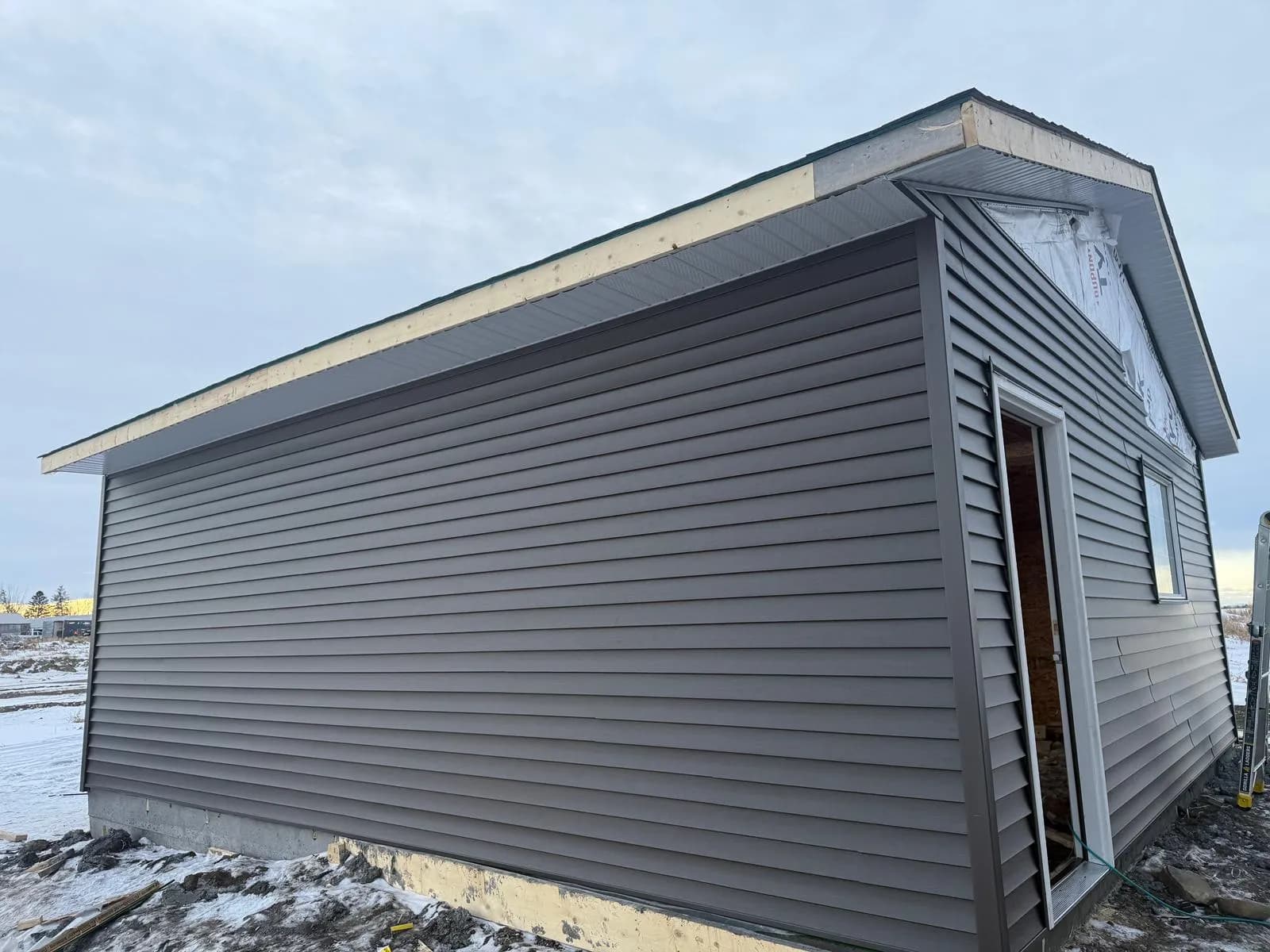
The soffit failure is quieter and more expensive. Blocked, painted-over or insulation-buried soffit vents starve the attic of intake air. Without intake, exhaust at the ridge cannot work — the attic ends up pulling its air from inside the house instead, carrying household moisture up into the insulation. The consequences are shingles cooked from below in summer, ice dams in winter, damp insulation, and in bad cases mould on the underside of the sheathing.
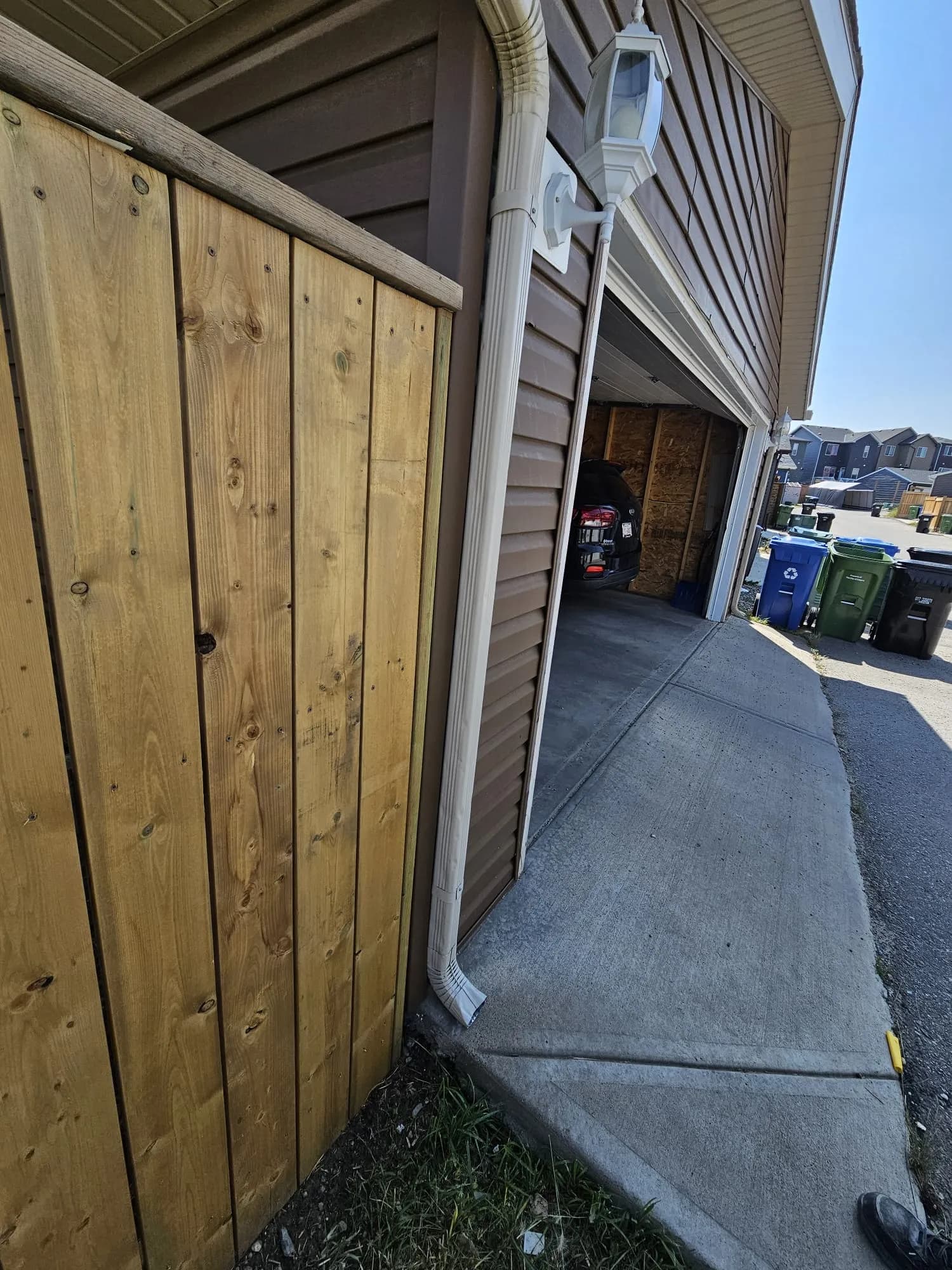
We find insulation blown over soffit vents on a large share of the Calgary attics we inspect. It is one of the most common and most consequential defects in this housing stock, it is invisible from the ground, and clearing it is among the cheapest things anyone can do to extend the life of a roof.
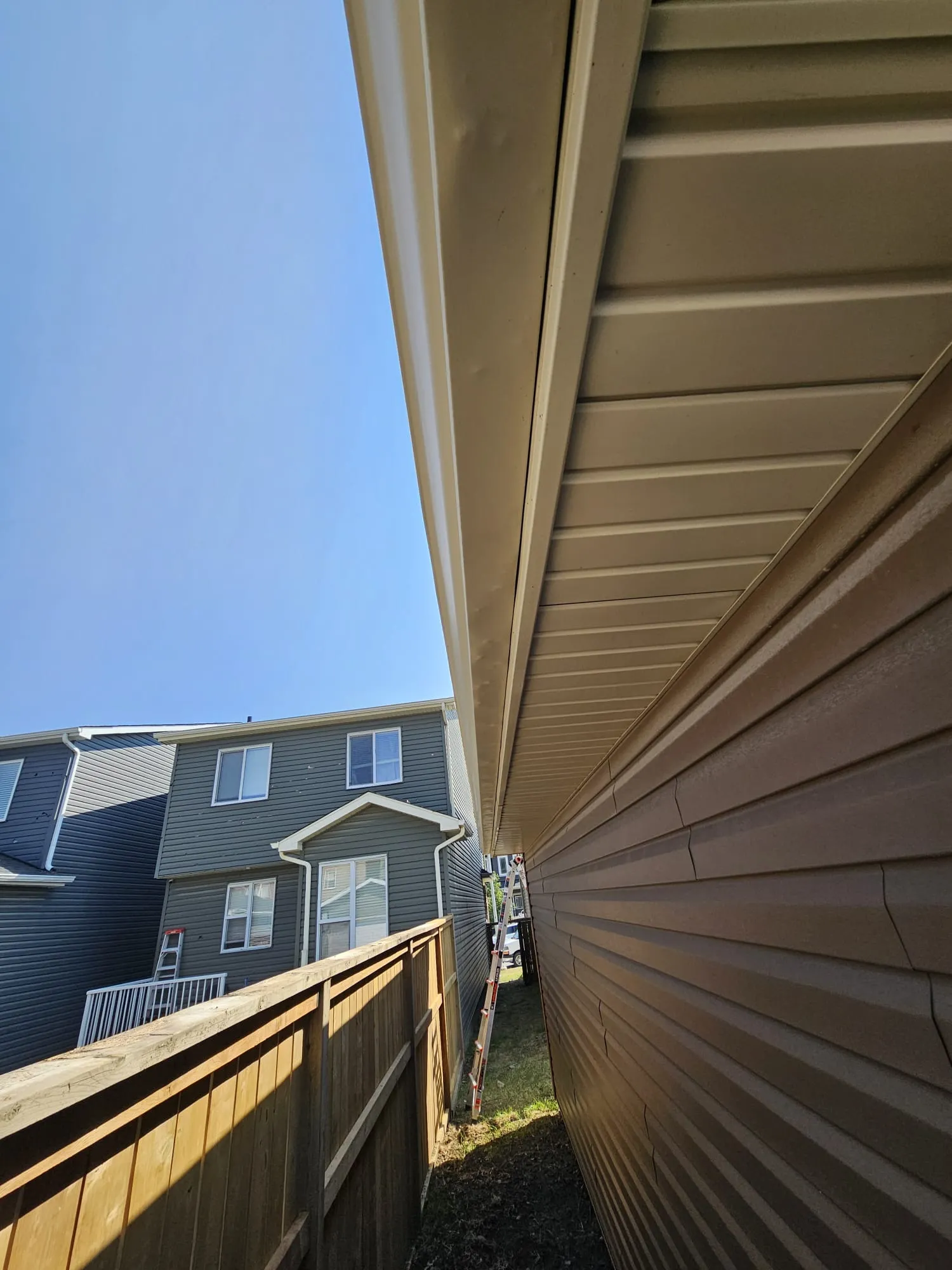
Because we roof, side and install eavestrough, we treat the eave as one assembly rather than three separate jobs: fascia, soffit, drip edge, flashing and trough, specified and installed together across Calgary, Airdrie, Cochrane, Okotoks, Strathmore, Olds, Red Deer and the acreages in between.
The full guide
Everything worth knowing about soffit & fascia in Alberta.
What soffit and fascia actually do
Start with fascia, because it is structural in a way people underestimate. It is fastened to the rafter tails or truss ends and it carries the full weight of the eavestrough plus whatever is in it — and in a Calgary February, what is in it can be a solid block of ice weighing far more than the trough itself. Fascia that has gone soft cannot hold a hanger, which is why sagging eavestrough and rotten fascia are effectively the same diagnosis.
Fascia also closes the end of the roof assembly, and together with the drip edge it controls where water leaves the roof. Without a proper drip edge, surface tension pulls runoff backwards around the roof edge and down the face of the fascia rather than into the trough — which is exactly the mechanism that rots it.
Soffit's job is airflow. A roof assembly in this climate needs the attic to stay near outdoor temperature so that snow on the roof does not melt, run down and refreeze at the cold eave. That requires continuous air movement: cool air entering at the soffit, warm moist air leaving at or near the ridge. The rule of thumb is that intake area should at least equal exhaust area, and in practice intake is almost always the side that is short.
Soffit is also the exclusion layer. An open eave is an invitation — house sparrows and starlings nest in it, wasps build in it, and squirrels and mice use it as a door into the attic. Properly installed soffit with intact venting keeps them out while letting air through, which perforated aluminum does and a piece of plywood does not.
Why fascia rots in Calgary, and what it means
Four causes, in roughly the order we find them.
Overflowing eavestrough is the most common. A trough clogged with leaves and needles does not spill neatly over the front lip — a good deal of the water goes over the back, between the trough and the fascia, and runs straight down the board. That happens every rainfall for years before anyone notices, and the wood is saturated long before it looks bad.
Missing or incorrectly installed drip edge is the second. Drip edge is a cheap piece of formed metal that projects the roof edge past the fascia and breaks surface tension so water drops into the trough instead of curling back. Older Calgary homes frequently never had one, and plenty of re-roofs have skipped it. Without it, the top edge of the fascia takes water on every rain.
Ice damming is the third and the most damaging. Water backing up behind an ice ridge at the eave saturates the sheathing, the sub-fascia and the fascia from above, cycles through freeze and thaw all winter, and produces rot in the one place that is hardest to see and most expensive to reach.
The fourth is simply age plus paint failure on wood fascia that has never been capped. Once the paint film breaks, wood in this climate takes on water through every wet cycle and dries out through every chinook, and it does not survive many rounds of that.
The practical consequence matters: by the time fascia is visibly rotten, the sub-fascia behind it and often the rafter tails are compromised too. That is why we open it up and quote what is actually there rather than pricing a wrap over rotten wood, which is a common and dishonest way to make a low number.
- Sagging or pulling eavestrough
- Staining or streaking down the fascia board
- Soft, spongy or crumbling wood at the eave
- Peeling paint and open joints on wood fascia
- Icicles and ice ridges along the eave in winter
- Birds, wasps or squirrels getting into the overhang
- Visible daylight or gaps in the soffit from below
Aluminum, vinyl and capped wood — what we install
For fascia, our default is aluminum fascia capping over a sound wood sub-fascia. The wood carries the structural load; the aluminum takes the weather and never needs paint. Where the sub-fascia is rotten, it gets replaced first — capping over rot is the shortcut that makes a low quote and a short-lived eave.
Aluminum comes in a wide colour range and is formed on site to the actual profile of your eave, which matters on older homes where nothing is quite standard. It is also the material that lets us match fascia, soffit and eavestrough in one colour family so the whole eave line reads as a single detail.
For soffit, aluminum is the workhorse: perforated for venting, solid for areas that must not vent, rigid enough to span, and available in both narrow and wide panel profiles. Vinyl soffit is lighter and less expensive, comes in vented and solid, and is a reasonable choice on a garage or a sheltered elevation. On acreages and exposed sites we generally specify aluminum for the wind resistance.
Where a home's architecture calls for it — heritage character, or a Hardie exterior — we install HardieSoffit or a wood soffit properly detailed and finished, so the eave suits the building rather than defaulting to metal on a house that should not have it.
The critical specification in every case is actual open venting area, not the appearance of it. Perforated panel has a published net free vent area, and matching that against the attic's requirement is the difference between a soffit that ventilates and one that only looks like it does.
Fixing the attic intake — the invisible half of the job
Replacing soffit without confirming the intake path is open is the most common way this work gets done badly, because the panel looks perfect from the ground while the attic is still suffocating.
The usual culprit is insulation. Over the decades attics get topped up, and blown-in cellulose or fibreglass migrates or is blown directly over the eave, plugging the gap between the top plate and the roof deck. Every soffit vent below is then venting into a wall of insulation. We check this from the attic side wherever access allows.
The fix is baffles — rigid channels installed between the rafters at the eave that hold the insulation back and keep an open air path from the soffit into the attic. They are inexpensive, they are permanent, and installing them is enormously easier while the soffit is off than at any other time.
The second common culprit is paint. On older homes with wood soffit, decades of repainting can seal perforated vents almost completely. And the third is the original build simply not having enough vent area, which was routine on houses built before ventilation requirements tightened.
The last thing we check is what else is terminating up there. Bathroom and kitchen exhaust fans venting into the attic rather than through the roof are extremely common in this housing stock, and they push warm, humid air directly into the space you are trying to keep cold and dry. It causes ceiling staining that looks exactly like a roof leak, damp insulation and frost on the underside of the sheathing. Redirecting them properly is a small job with a large effect.
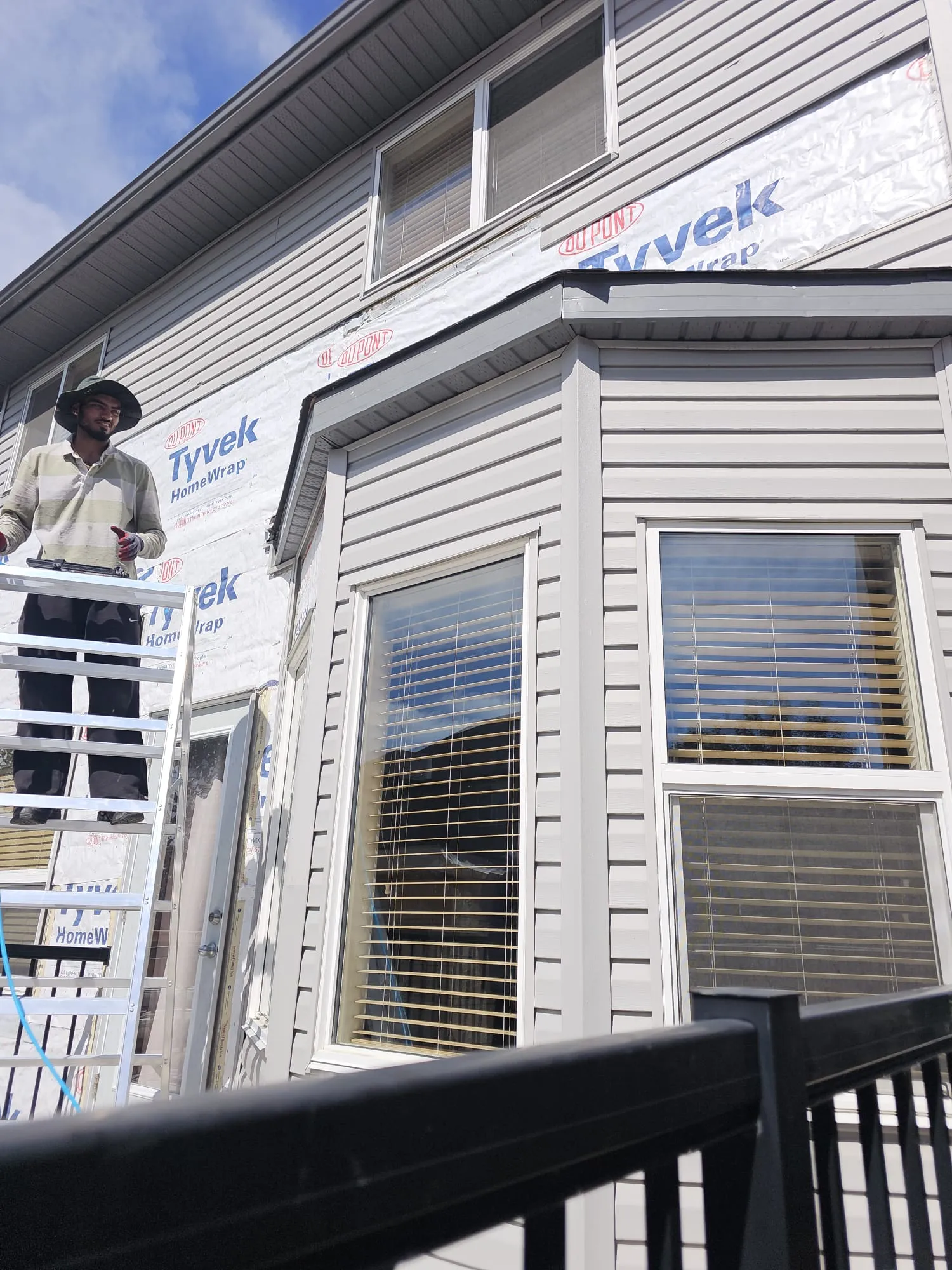
Doing the eave as one job
Soffit, fascia, drip edge and eavestrough are four products that meet in a space of about twenty centimetres, and every one of them depends on the others being right. That is the argument for doing them together.
In practical terms: there is no point hanging new eavestrough on rotten fascia, no point replacing fascia while leaving the drip edge that rotted it, no point installing vented soffit while the attic intake stays blocked, and no point correcting ventilation at the eave while the exhaust at the ridge is inadequate. Each of those on its own is a partial fix that leaves the underlying mechanism running.
The cheapest moment to do the whole eave is during a roof replacement, when the roof edge is already open, the crew is already mobilized, the disposal bin is already on site, and drip edge is going on anyway. Adding soffit, fascia and eavestrough at that point costs a fraction of what the same work costs as its own mobilization.
The second-cheapest moment is during a re-side, when scaffolding or staging is already up and the trim detail is being reworked anyway.
If neither is happening, the eave still stands on its own as a job — and if you have sagging troughs, streaked fascia or ice building along the edge every February, it is a job worth doing before it becomes a sheathing and rafter-tail job instead.
Soffit and fascia across Calgary and Central Alberta
Eave work in this region concentrates on older housing stock and on properties with heavy tree cover. The 1960s and 1970s bungalows across Acadia, Willow Park, Haysboro, Thorncliffe, Highwood and Bowness are the classic case: original wood fascia, painted wood soffit with vents largely sealed, no drip edge, and an attic that has been under-ventilated for fifty years.
Under mature trees — Elbow Park, Mount Royal, Renfrew, Britannia, older Bridgeland — the same buildings also get chronic eavestrough clogging, which accelerates every fascia problem there is.
We do eave work across every Calgary quadrant and out through Airdrie, Chestermere, Cochrane, Okotoks, High River, Langdon, Strathmore, Crossfield, Carstairs, Didsbury, Olds, Innisfail, Red Deer, Sylvan Lake, Canmore, Beiseker, Three Hills, Drumheller, Nanton and Diamond Valley.
On acreages the driver is different: wind exposure. A country home with no windbreak takes driven rain and snow directly into the eave, and a soffit panel that would sit quietly on a city lot for thirty years can work loose out there. We specify heavier gauge and tighter fastening accordingly, and we include the garage, shop and outbuildings in the same visit — because sending a crew forty-five minutes out to do only the house is inefficient for everyone.
Soffit & Fascia across Calgary & Central Alberta
Plus: Acme, Aldersyde, Ardenode, Arrowwood, Balzac, Banff, Bassano, Benchlands, Bergen, Black Diamond, Blackfalds, Blackie, Bottrel, Bowden, Carbon, Caroline, Carseland, Cayley, Champion, Cheadle, Claresholm, Cluny, Cochrane Lake, Conrich, Cremona, Dalroy, Dead Man's Flats, Delacour, Delburne, Dewinton, Dickson, Dogpound, Eckville, Eden Valley, Elbow Valley, Elnora, Ensign, Exshaw, Ghost Lake, Gleichen, Harmony, Harvie Heights, Heritage Pointe, Hussar, Huxley, Indus, Irricana, James River Bridge, Janet, Kananaskis Village, Kathyrn, Lac des Arcs, Linden, Longview, Lyalta, Madden, Markerville, Millarville, Milo, Morley, Morrin, Mossleigh, Munson, Namaka, Nightingale, Parkland, Penhold, Pine Lake, Priddis, Priddis Greens, Queenstown, Red Deer Lake, Redwood Meadows, Rocky Mountain House, Rockyford, Rosebud, Siksika Nation, Springbrook, Spruce View, Standard, Stavely, Swalwell, Torrington, Trochu, Tsuut'ina Nation, Turner Valley, Vulcan, Waiparous, Water Valley, Wimborne — and the surrounding Rocky View, Foothills, Mountain View, Wheatland, Kneehill and Red Deer county acreages.
Questions
Soffit & Fascia FAQ
What is the difference between soffit and fascia?
+
Fascia is the board running along the roof edge that your eavestroughs hang on; soffit is the vented underside of the roof overhang. Fascia handles the load and the weather at the roof edge; soffit feeds the attic the intake air it needs to stay cold, and keeps birds and rodents out.
How much does soffit and fascia cost?
+
It varies with the size of the home, the length and height of the roofline, how many storeys and gables are involved, and whether rotten sub-fascia has to be replaced before new material goes on. We give honest itemized quotes after seeing the home in person rather than a guess over the phone.
My eavestroughs are sagging — is that the fascia?
+
Almost always. Eavestrough hangers fasten into the fascia, and fascia that has gone soft cannot hold them. Sagging trough and rotten fascia are effectively the same diagnosis, and the underlying cause is usually water getting behind the trough from clogging or a missing drip edge.
Why is my attic frosting up in winter?
+
Usually blocked intake at the soffit combined with warm moist air getting into the attic — often from a bathroom fan that terminates in the attic instead of through the roof. Without intake air, the attic pulls its air from inside the house. We check both as part of any eave job.
Can you fix soffit vents that are blocked with insulation?
+
Yes, and it is one of the highest-value small jobs we do. Blown-in insulation migrating over the eave plugs the intake path so completely that the soffit is venting into a wall of fibreglass. The fix is rigid baffles between the rafters, and installing them is far easier while the soffit is off.
Should I do soffit and fascia at the same time as my roof?
+
If they need doing, yes — it is by a wide margin the cheapest moment. The roof edge is already open, the crew and bin are already there, and drip edge is going on regardless. Doing it separately later means paying for the mobilization twice.
Aluminum or vinyl soffit — which is better?
+
Aluminum for most situations, particularly on exposed and acreage properties, because it is more rigid and holds up better to wind. Vinyl is lighter and less expensive and is perfectly reasonable on a garage or a sheltered elevation. What matters more than the material is the actual open vent area, which is a published spec worth matching against your attic's requirement.
Can you keep birds and wasps out of my eaves?
+
Yes. Open or damaged soffit is an open invitation to sparrows, starlings, wasps and squirrels. Properly installed perforated soffit vents air while excluding them, and we seal the gaps at the ends of runs and at gable transitions where they usually get in.
Do you replace rotten wood behind the fascia?
+
Yes, and we open it up to find out rather than quoting a wrap over unknown wood. Capping aluminum over rotten sub-fascia is a common way to produce a low quote and a short-lived eave. If the sub-fascia or rafter tails are gone, they get replaced first.
Will the colours match my roof and eavestroughs?
+
Yes. We form fascia capping and eavestrough on site and select soffit from a matched colour range, so the whole eave line reads as one detail rather than three products meeting awkwardly.
Related services
We also handle
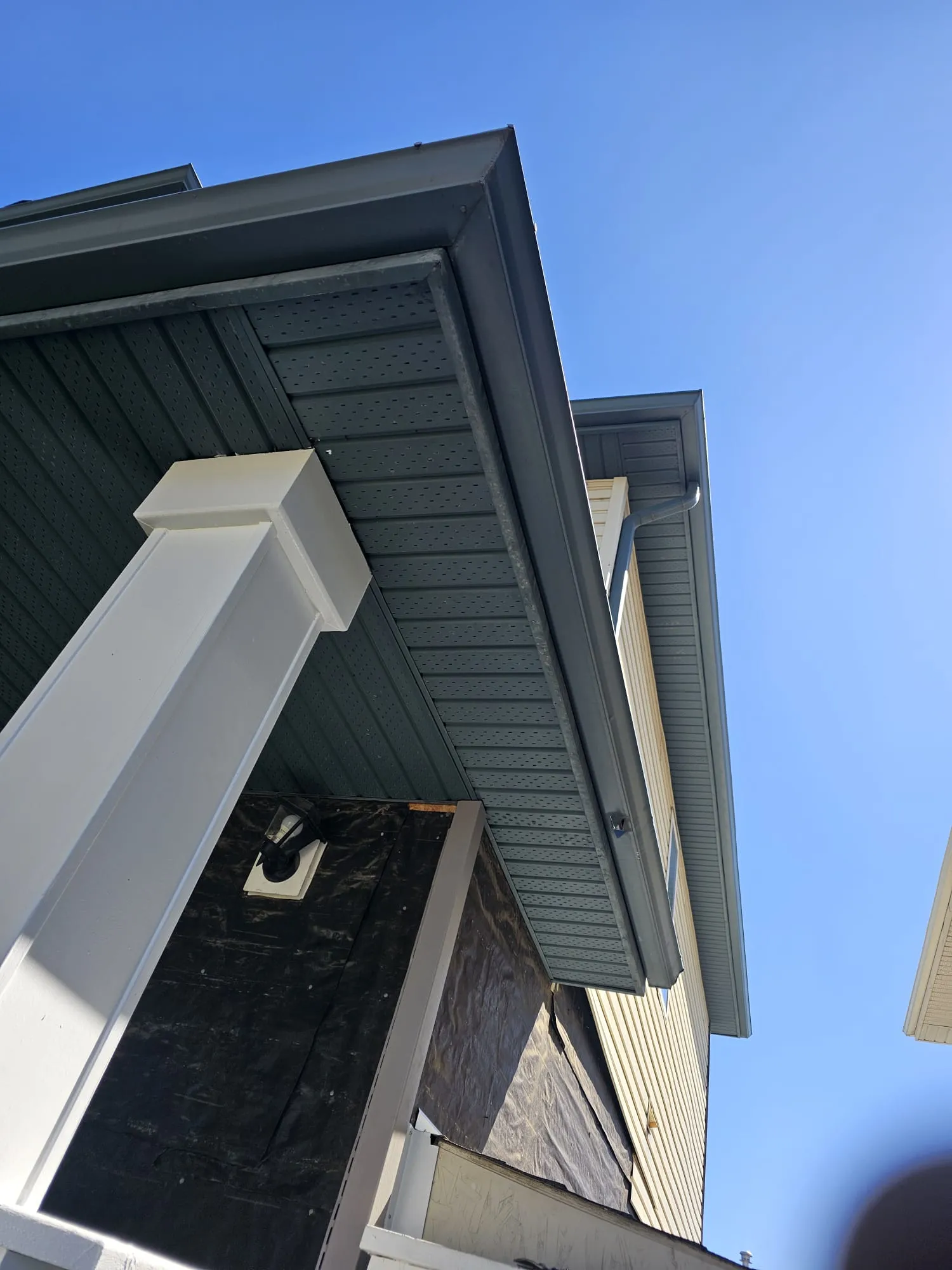
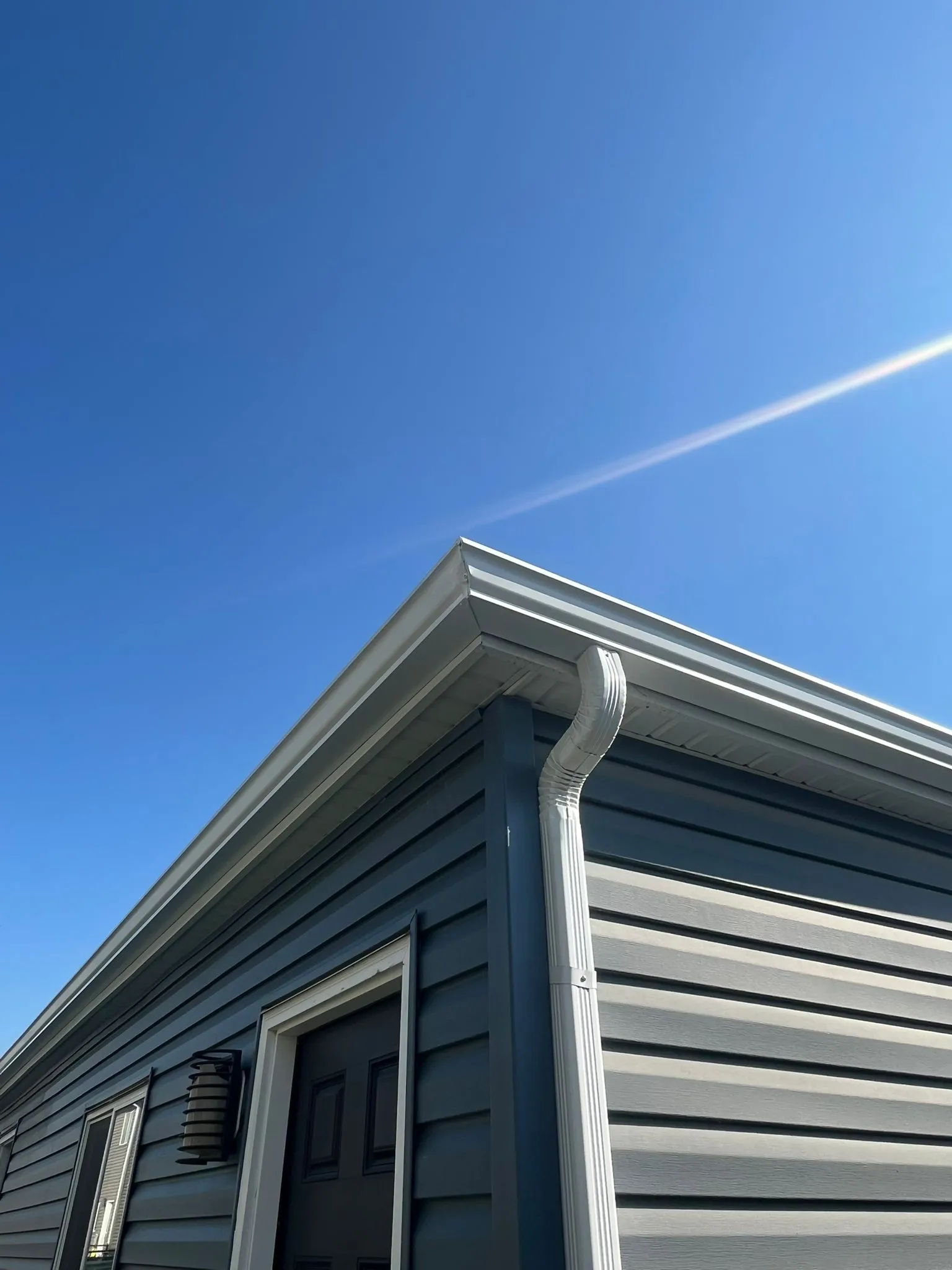
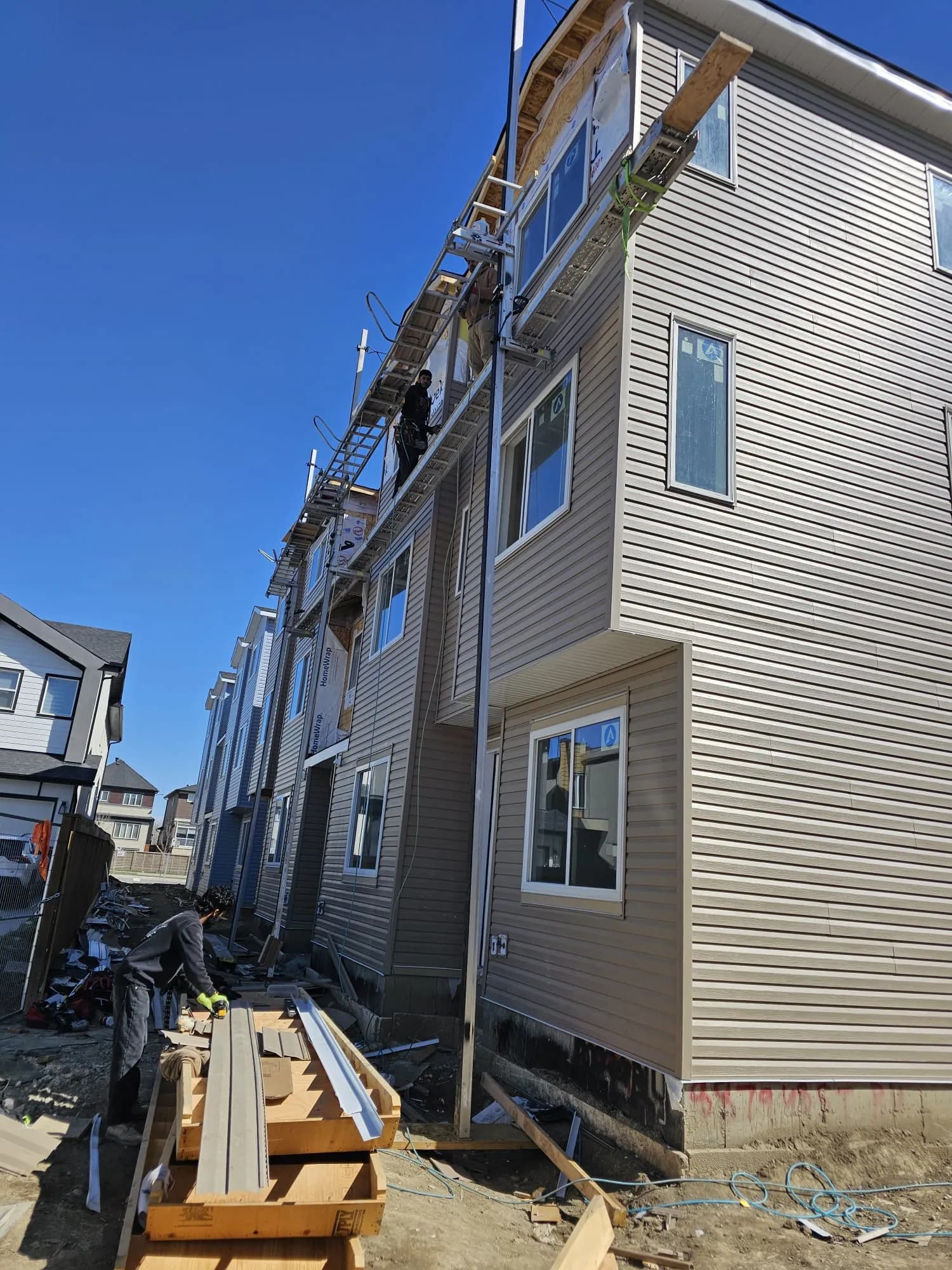
Our work
Soffit & Fascia & more
Free inspection
Get your soffit & fascia quote
No pressure · No surprises
Ready to move on your soffit & fascia project?
Free on-site inspection, honest written quote, and full insurance-claim support if you need it.