
Siding · Calgary & Area
Fiber Cement (James Hardie) Siding
James Hardie fibre cement — non-combustible, hail-resistant, and the finish that reads premium from the street
Siding
Fiber Cement (James Hardie) Siding done right, the first time.
James Hardie fibre cement is the premium exterior in this climate: dimensionally stable, non-combustible, far more resistant to hail and wind-driven debris than any vinyl, and finished in ColorPlus factory colour that holds for decades. It is also the least forgiving cladding to install — specific fastening, specific gapping, specific flashing at every joint. We install it to Hardie specification, and that is the whole point of using us for it.
More about hardie siding
Built for Calgary's weather & homes.
James Hardie fibre cement is a composite of Portland cement, sand and cellulose fibre, and it behaves nothing like vinyl. It is heavy, dimensionally stable across a wide temperature range, non-combustible, and far more resistant to hail and wind-driven debris than any plastic cladding. In a region that combines the worst hail in Canada with a genuine wildfire interface along the foothills, both of those properties are practical rather than theoretical.
It is also the material that looks the part. Thicker butt edges throw a real shadow line, the surface can be smooth or woodgrain, and the profile range — lap plank, vertical panel, shingle courses, board-and-batten with HardieTrim — supports almost any architectural direction. It is the reason fibre cement dominates on higher-end infills in Altadore, Marda Loop, Bridgeland and Britannia and on estate homes across Springbank, Bearspaw and Elbow Valley.
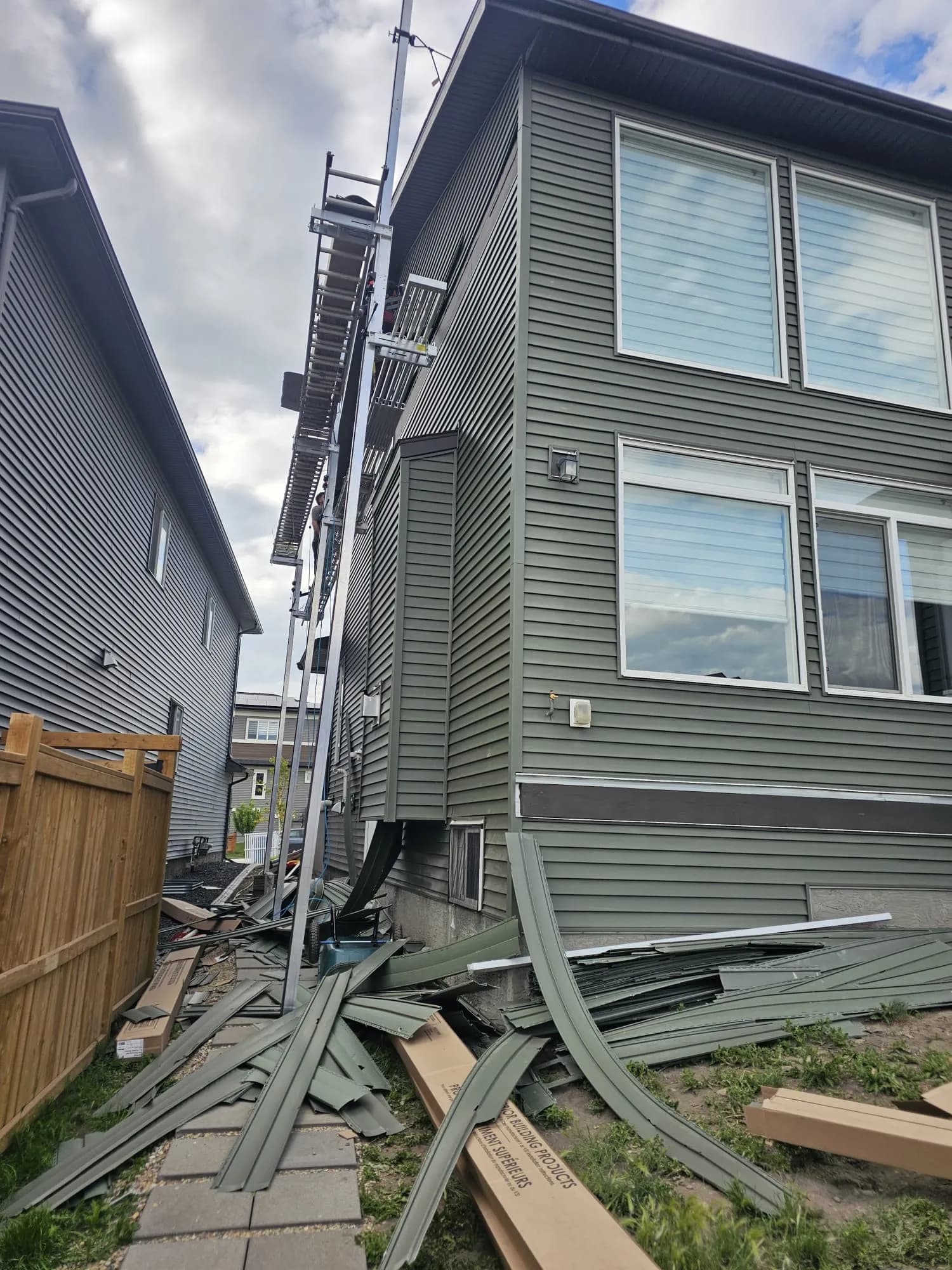
The trade-off is that Hardie is unforgiving of a bad install in ways vinyl is not. It needs specific fastener types and placement, specific gapping at joints, specific clearances at grade and at every horizontal transition, and flashing behind every butt joint. Get those wrong and you get a wall that looks fine for two years and then telegraphs every joint. A bad Hardie install is worse than a good vinyl one, which is exactly why installer competence matters more with this product than any other cladding we hang.
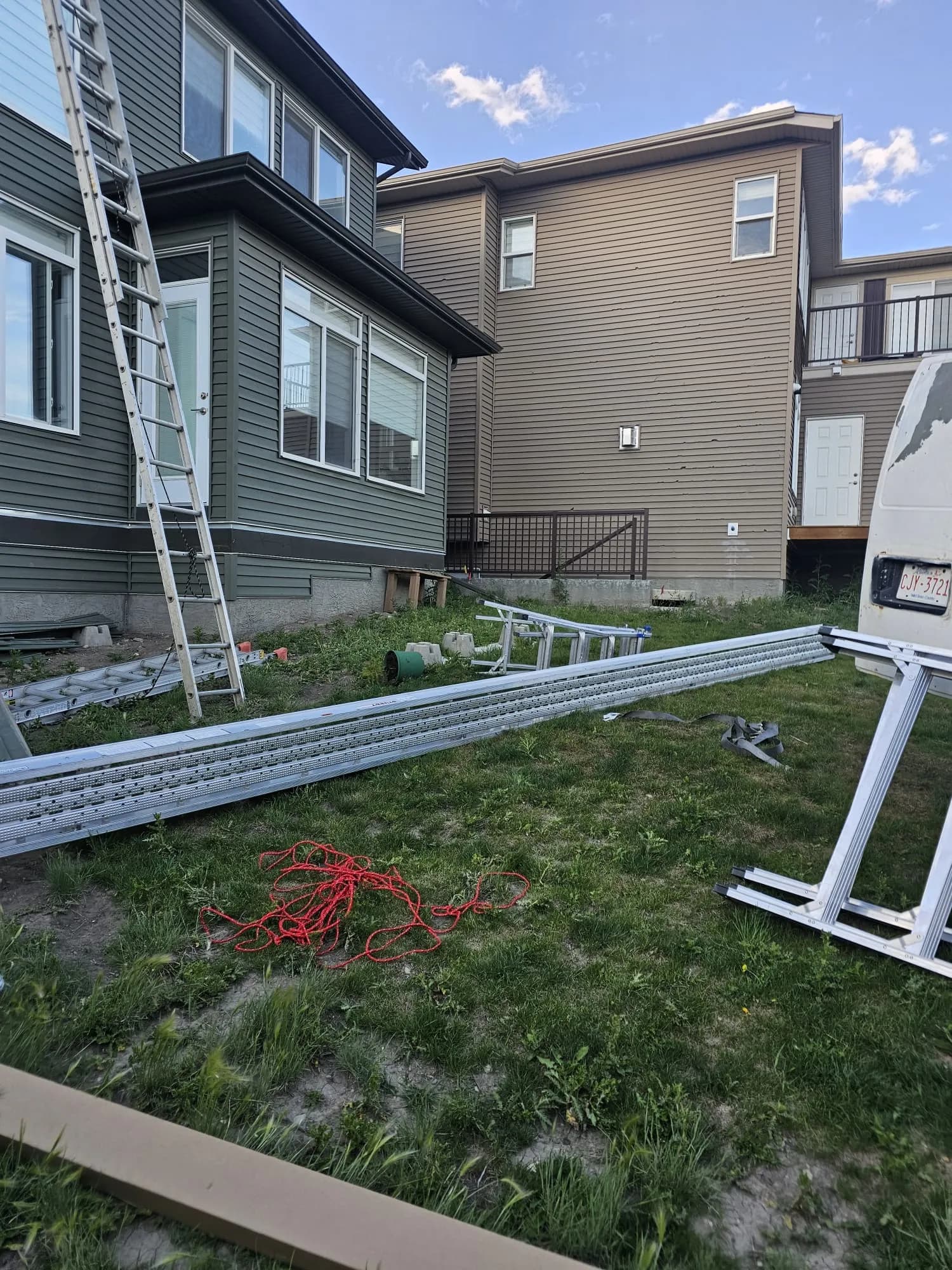
7 Lucky Enterprises installs Hardie across Calgary and Central Alberta on houses, detached garages and acreage homes. We inspect the wall assembly before quoting, correct the water-resistive barrier and flashing while the wall is open, and install to Hardie's published specification — which is also what keeps the manufacturer's material warranty intact.
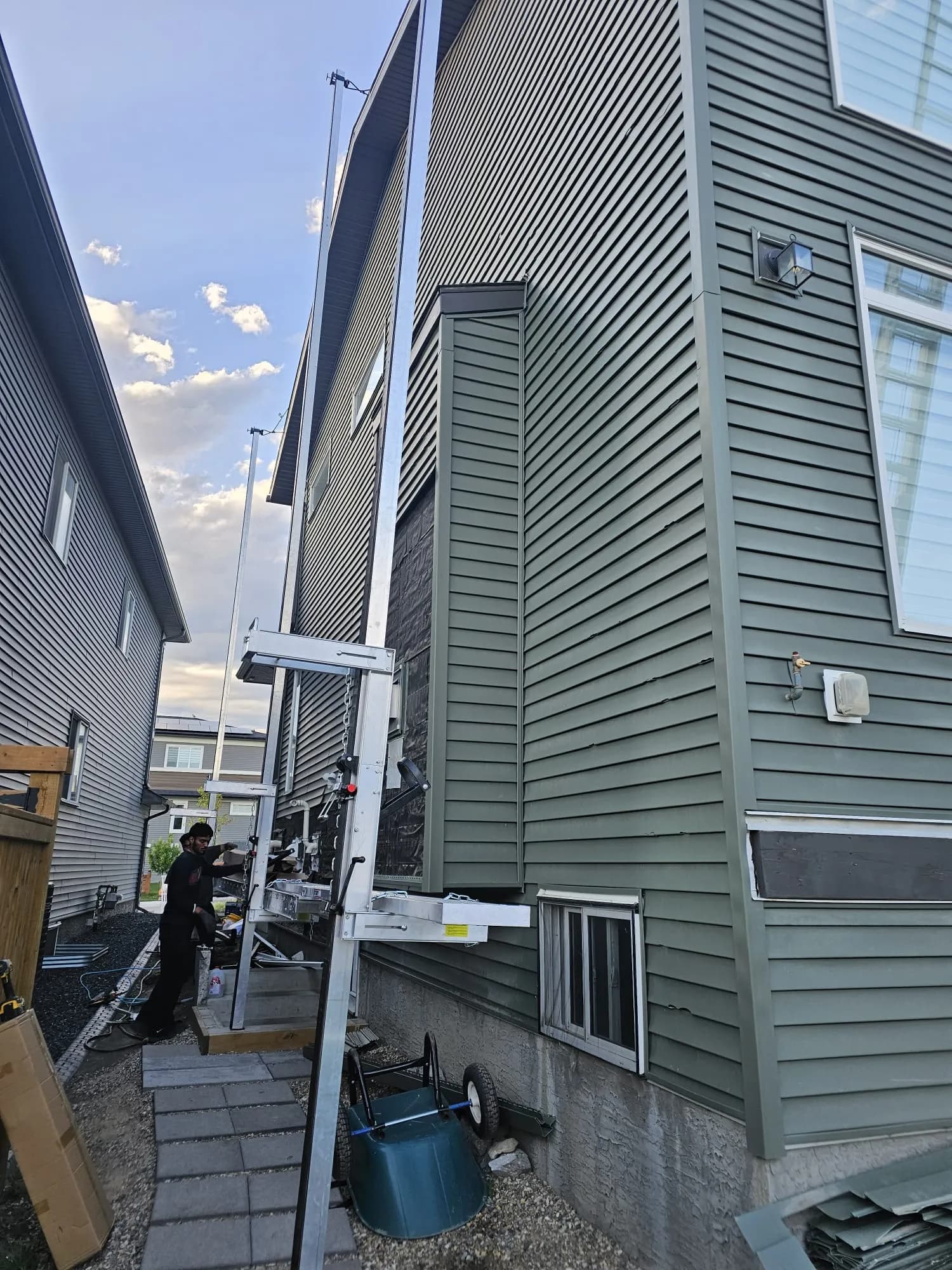
ColorPlus is worth understanding as its own decision. It is a factory-applied, baked finish rather than a site-applied paint, applied in controlled conditions on every face and edge, and it holds colour for decades with a fade warranty behind it. Unlike vinyl, it can also be repainted later if you want a different look — so the colour decision is durable without being permanent.
The full guide
Everything worth knowing about hardie siding in Alberta.
The Hardie product range and what each is for
HardiePlank lap siding is the workhorse: horizontal boards in widths from about five to twelve inches, smooth or in a woodgrain texture, in the classic Cedarmill or the flatter Select Cedarmill profile. It suits almost every house style in this region and is what most Calgary Hardie exteriors are made of.
HardiePanel is a large-format vertical sheet, used on its own for a clean modern face or with HardieTrim battens for a board-and-batten look. Board-and-batten has become a signature of contemporary infill and farmhouse-style acreage builds across the region, and it is a strong way to break up a large gable.
HardieShingle gives shingle or shake coursing without cedar's maintenance, fire risk or cost trajectory. It is most often used as an accent — gable ends, dormers, a front elevation band — rather than as a whole-house cladding.
HardieTrim handles the corners, the window and door surrounds, the frieze boards and the battens. Getting trim right is what separates a Hardie exterior that looks designed from one that looks clad, and it is where we spend disproportionate attention.
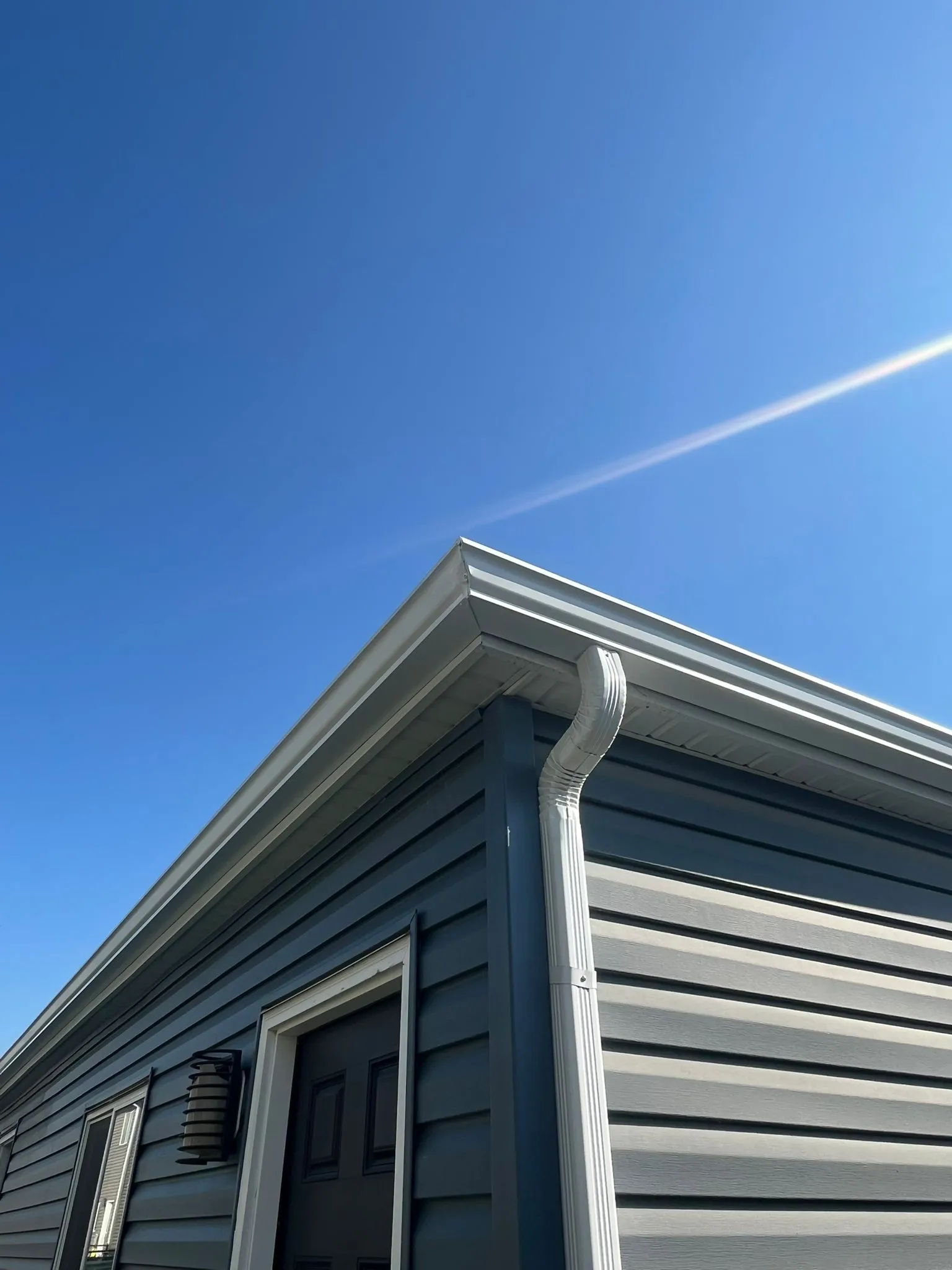
HardieSoffit completes the eave in vented or non-vented panels, matched to the wall finish. Combined with matching fascia and seamless eavestrough, it gives an eave line that reads as one continuous detail rather than three products meeting awkwardly.
Installing to specification — why it matters so much
James Hardie publishes a detailed installation specification, and the material warranty is written against it. Almost every failed Hardie wall we are asked to look at failed because that specification was treated as a suggestion.
Fastening is the first place it goes wrong. Hardie specifies fastener type, length, spacing and — critically — placement relative to the board edge, with blind nailing through the upper portion of the plank being the preferred method. Over-driven fasteners that crush the board, fasteners set too close to the edge, and pneumatic guns run at the wrong pressure all produce failures that do not appear for a season or two.
Gapping is second. Fibre cement moves less than vinyl but it does move, and it needs specified clearance where a plank meets trim and at butt joints, with flashing behind every butt joint rather than caulk in front of it. Caulked butt joints without flashing are the single most common Hardie defect in this market, and they open within a few freeze-thaw cycles.
Clearances are third and are climate-critical here. Hardie specifies minimum clearance from grade, from roof surfaces, from decks and from horizontal flashings, because fibre cement absorbs water at a cut edge if it sits in contact with a wet surface. In a city that accumulates snow against walls for months, a plank installed tight to a deck or roof will wick and eventually deteriorate at the edge.
Cut edges need priming, cuts should be made with the specified blade and with dust control, and every penetration needs proper flashing. None of it is exotic; all of it is specified; and doing all of it is what installing to spec actually means.
Fire, hail and the Alberta case for fibre cement
Two regional realities make fibre cement more compelling here than in most of Canada.
The first is hail. Calgary and the corridor north to Red Deer see more damaging hail than anywhere else in the country. Fibre cement does not crack the way cold vinyl does; it takes impact that would puncture a plastic panel. It is not indestructible — severe hail can chip or hole it — but the threshold is far higher, and on a property that has already been through one claim that difference is measurable in deductibles not paid.
The second is fire. The foothills communities along the western edge of our service area — Bragg Creek, Redwood Meadows, Springbank, Priddis, Millarville, Canmore, Exshaw, Dead Man's Flats — sit in the wildland-urban interface, and wildfire risk in that corridor is a live planning consideration rather than an abstract one. Fibre cement is non-combustible. It will not ignite from ember cast, which is the mechanism by which most structures are actually lost in an interface fire.
For an acreage or foothills property, that combination — non-combustible, hail-resistant, and stable under the wind exposure that comes with having no neighbouring buildings — is a genuinely different value proposition than it is on a sheltered city lot. It is why we specify Hardie more often the further west and the further out of town a property sits.
Cost, process and timeline
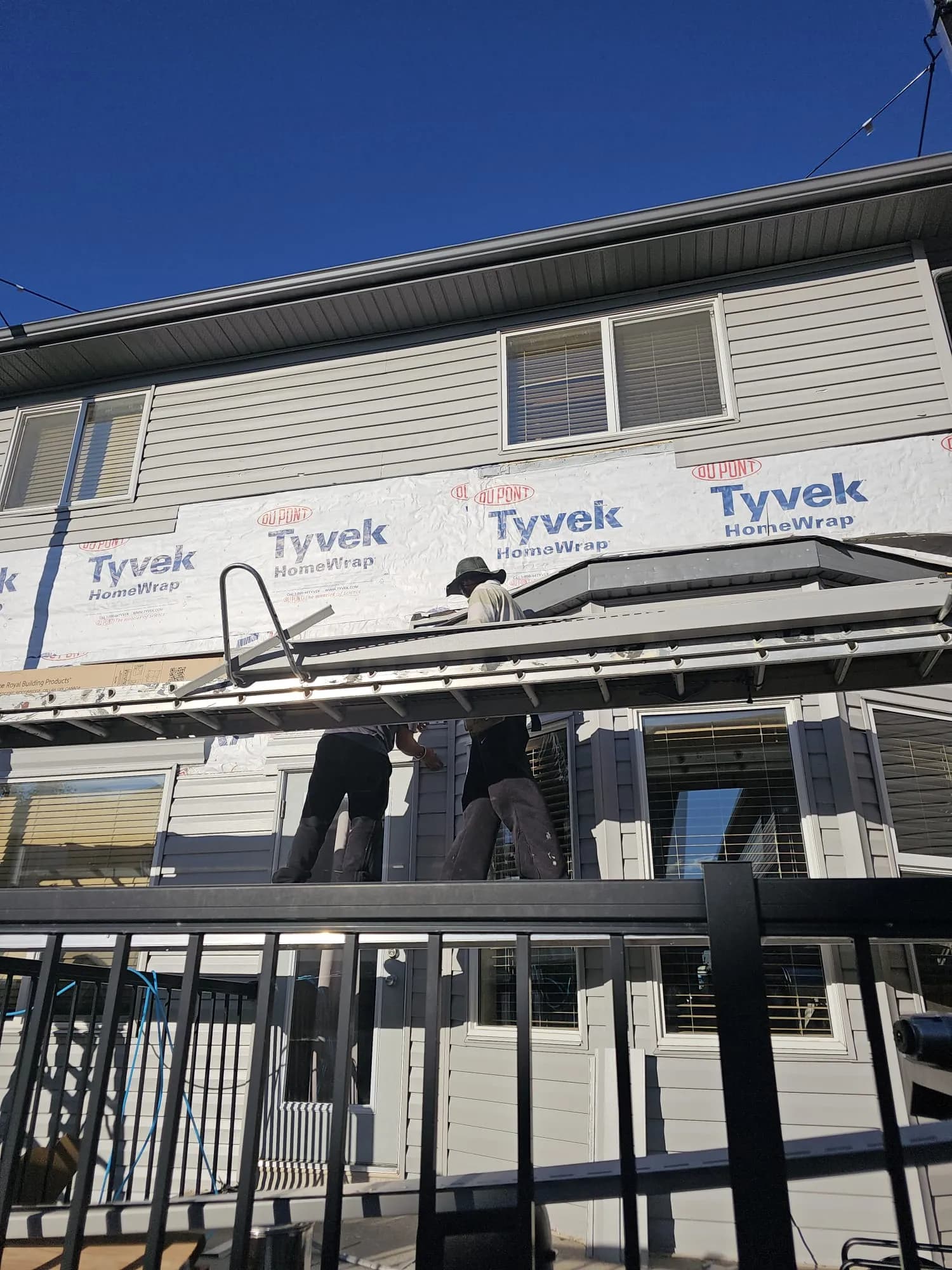
Getting started is straightforward. Book a free on-site inspection and we walk the home, measure, check the existing wall assembly, and talk through profiles, colours and layout. You get a clear written quote, material and warranty options, and an honest read on whether Hardie or vinyl suits your situation. When you are ready, our licensed, insured, WCB-covered crews install to Hardie specification and finish with a magnetic nail sweep and a clean site.
Price is driven by wall area including gables, the number of storeys and the staging that implies, the amount of trim work — corners, window and door surrounds, frieze boards, battens — the profile and finish you choose, and what the tear-off exposes behind the old cladding.
Timeline is longer than vinyl for the same house, typically by a meaningful margin, because the material is heavier, every cut is slower, and the trim detailing is more involved. A standard Calgary two-storey commonly runs one to two weeks; a large acreage home with substantial gable and trim work runs longer. We give a firm range up front.
Unlike vinyl, fibre cement installs perfectly well in cold weather — it does not become brittle — so winter scheduling is genuinely available, which matters in a market where spring and summer book out.
James Hardie siding across Calgary and Central Alberta
Fibre cement demand in this region concentrates in three places. Inner-city infill and renovation neighbourhoods where the architecture justifies the material — Altadore, Marda Loop, Britannia, Bridgeland, Renfrew, Killarney, Mount Pleasant, West Hillhurst. Estate and acreage communities where fire and wind exposure make it practical — Springbank, Bearspaw, Elbow Valley, Priddis, Bragg Creek, Millarville, Heritage Pointe. And newer suburban builds where homeowners are upgrading from builder-grade cladding.
We install it across all four Calgary quadrants and out through Airdrie, Chestermere, Cochrane, Okotoks, High River, Langdon, Strathmore, Crossfield, Carstairs, Didsbury, Olds, Innisfail, Red Deer, Sylvan Lake, Canmore, Drumheller, Nanton and Diamond Valley, and throughout Rocky View, Foothills, Mountain View and Red Deer County.
Canmore and the Bow Valley deserve a specific note: architectural controls in that corridor frequently favour or require non-combustible cladding, and fibre cement with the right profile and colour is one of the more straightforward ways to satisfy them while getting a mountain-appropriate look.
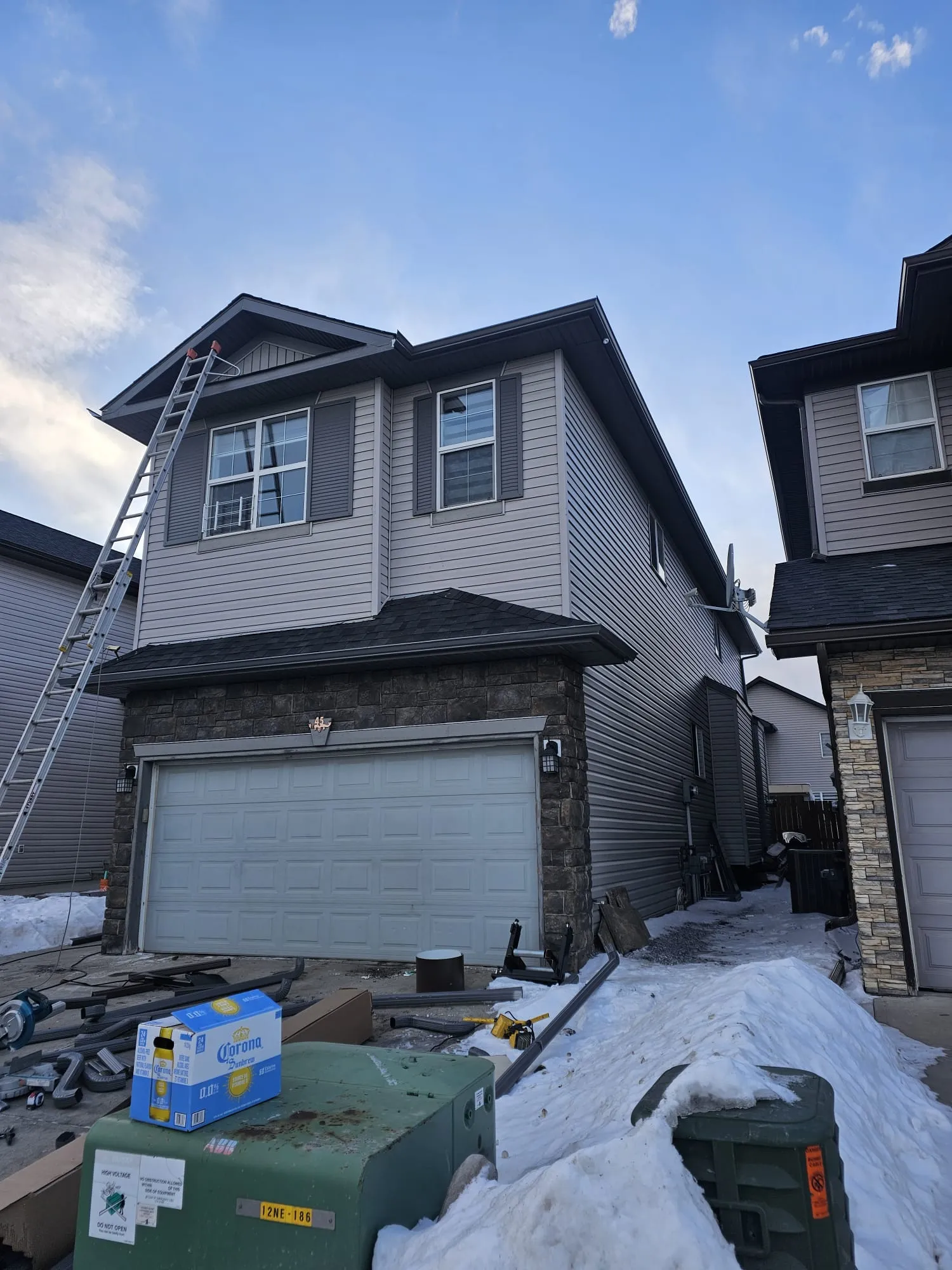
Hardie Siding across Calgary & Central Alberta
Plus: Acme, Aldersyde, Ardenode, Arrowwood, Balzac, Banff, Bassano, Benchlands, Bergen, Black Diamond, Blackfalds, Blackie, Bottrel, Bowden, Carbon, Caroline, Carseland, Cayley, Champion, Cheadle, Claresholm, Cluny, Cochrane Lake, Conrich, Cremona, Dalroy, Dead Man's Flats, Delacour, Delburne, Dewinton, Dickson, Dogpound, Eckville, Eden Valley, Elbow Valley, Elnora, Ensign, Exshaw, Ghost Lake, Gleichen, Harmony, Harvie Heights, Heritage Pointe, Hussar, Huxley, Indus, Irricana, James River Bridge, Janet, Kananaskis Village, Kathyrn, Lac des Arcs, Linden, Longview, Lyalta, Madden, Markerville, Millarville, Milo, Morley, Morrin, Mossleigh, Munson, Namaka, Nightingale, Parkland, Penhold, Pine Lake, Priddis, Priddis Greens, Queenstown, Red Deer Lake, Redwood Meadows, Rocky Mountain House, Rockyford, Rosebud, Siksika Nation, Springbrook, Spruce View, Standard, Stavely, Swalwell, Torrington, Trochu, Tsuut'ina Nation, Turner Valley, Vulcan, Waiparous, Water Valley, Wimborne — and the surrounding Rocky View, Foothills, Mountain View, Wheatland, Kneehill and Red Deer county acreages.
Questions
Fiber Cement (James Hardie) Siding FAQ
What is James Hardie siding made of?
+
Portland cement, sand and cellulose fibre, pressed and cured into planks, panels or shingles. That composition is why it is non-combustible, dimensionally stable across a wide temperature range, and far more resistant to hail and wind-driven debris than plastic cladding.
How much more does Hardie cost than vinyl?
+
A substantial premium on material and a larger one on labour, because it is heavier, cuts differently and takes considerably longer to install correctly. We will give you both numbers on the same house so you can compare them honestly rather than in the abstract.
Is fibre cement worth it in Calgary?
+
It depends on three things: how long you are staying, how much hail exposure you have, and whether wildfire is a consideration where you live. For long-term ownership, for a property that has already been through a hail claim, or for a foothills or acreage address, the case is strong. For a house you are preparing to sell, heavier-gauge insulated vinyl usually makes more sense.
How long does James Hardie siding last?
+
Hardie carries a 30-year non-prorated limited warranty on the board and a 15-year finish warranty on ColorPlus, and installed to specification it commonly outlasts both. The variable is the install, not the material — almost every failed Hardie wall we see failed at fastening, gapping or clearance.
Can Hardie be painted later?
+
Yes, which is a real advantage over vinyl. ColorPlus holds its factory colour for decades, and when you want a change the board takes paint properly. Your colour decision is durable without being permanent.
Does Hardie stand up to hail?
+
Far better than vinyl. It does not crack the way cold PVC does, and the impact energy needed to damage it is considerably higher. It is not indestructible — severe hail can chip or hole it — but on a property that has been through one claim the difference is measurable.
Can you install fibre cement in winter?
+
Yes. Unlike vinyl, fibre cement does not become brittle in cold, so winter installation is genuinely practical. That is worth knowing in a market where spring and summer schedules fill quickly.
Why does the installer matter so much with this product?
+
Because the material warranty is written against James Hardie's published specification: fastener type and placement, gapping at joints, flashing behind every butt joint, and minimum clearances from grade, roof and deck surfaces. Those clearances matter especially in a city where snow sits against walls for months. Get them wrong and the wall telegraphs every joint within a couple of seasons.
Can I do Hardie on the front and vinyl on the sides?
+
Yes, and it is a common and sensible choice. Hardie on the elevations that are seen and where the architecture reads, vinyl on the side walls facing a fence. We detail the transition so it looks deliberate rather than budgetary.
Will you match the soffit, fascia and trim?
+
Yes — HardieSoffit and HardieTrim, or matched aluminum where that suits better, plus seamless eavestrough in a colour that ties the eave line together. Doing all of it in one mobilization is both cheaper and visually far better than doing it piecemeal.
Related services
We also handle
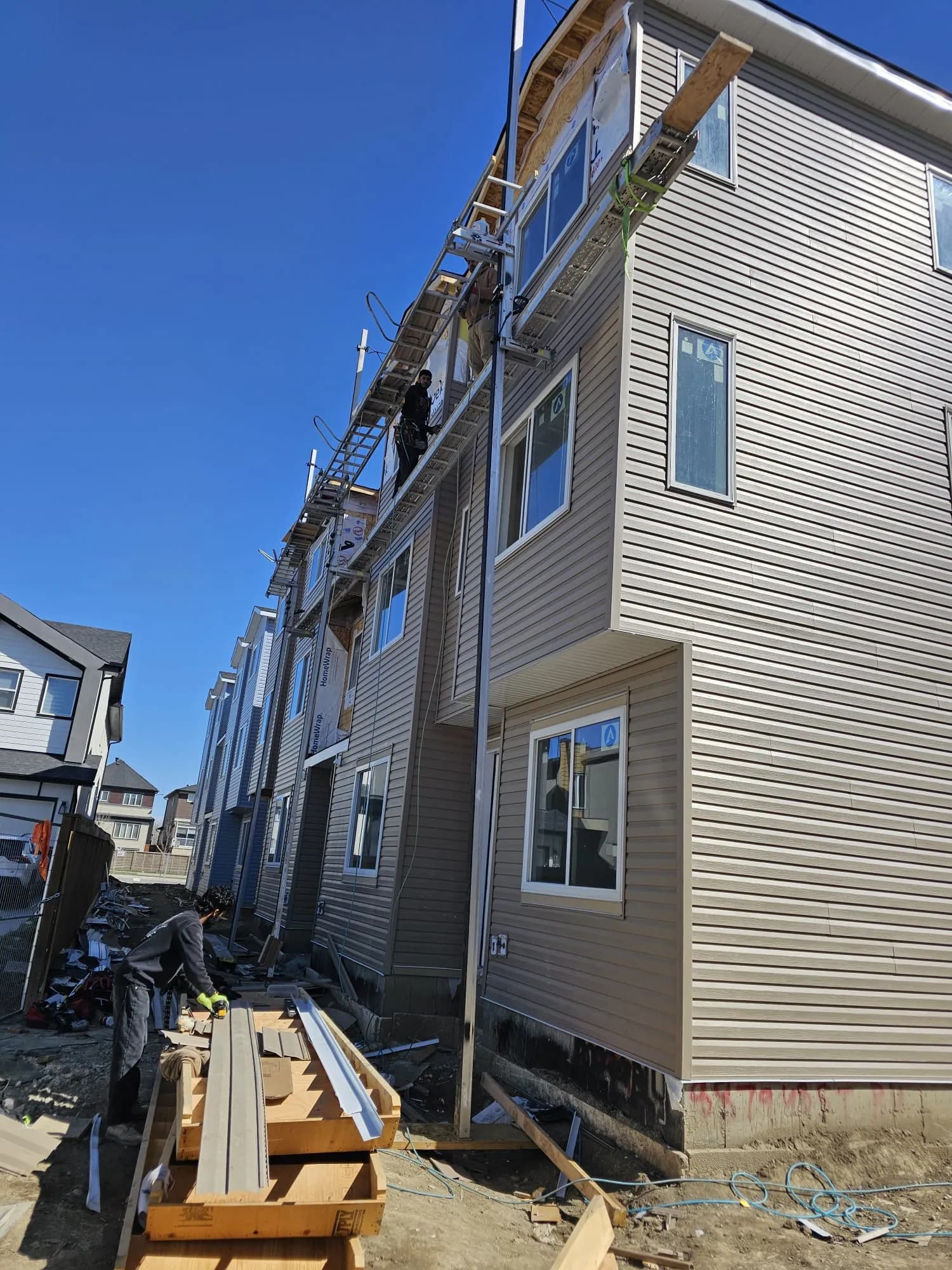
Our work
Fiber Cement (James Hardie) Siding & more
Free inspection
Get your hardie siding quote
No pressure · No surprises
Ready to move on your hardie siding project?
Free on-site inspection, honest written quote, and full insurance-claim support if you need it.